
Short answer: Submit the appropriate SNHD application and supporting information for your project, resolve the required review, keep changes coordinated, and complete the required preoperational inspection and permitting steps before opening. SNHD's regulations require an application at least 30 calendar days before the proposed opening; that is a submission minimum, not a promise of approval within 30 days. SNHD Food Regulations, §§ 8-201 through 8-303
Opening a restaurant involves more than obtaining a building permit. The Southern Nevada Health District (SNHD) reviews the proposed food operation, its equipment and facilities, and the information needed to issue a health permit. For an owner, the practical challenge is making the menu, application, drawings, equipment specifications, and finished space describe the same restaurant.
This guide covers permanent restaurants, cafés, and bars with food or beverage preparation. It focuses on preparing for SNHD review. Mobile food units, temporary events, cottage food operations, and routine restaurant inspection grades follow different questions and are outside this guide's scope.
For the construction services and project coordination behind the approved plans, see our restaurant and bar build outs. The sections below explain the owner's preparation work and the decisions to resolve with SNHD.
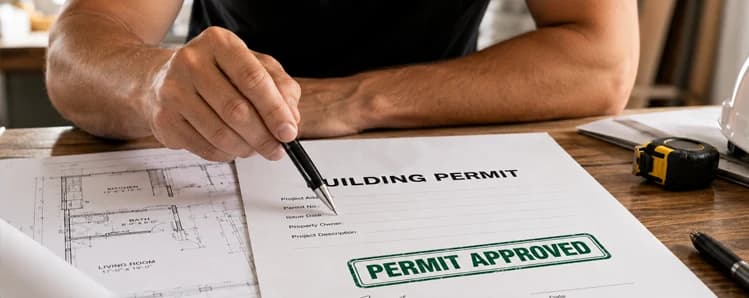
1. Identify the application path before assembling the package
An existing kitchen is useful evidence about a space, but it does not establish approval for a new owner, a different menu, or a changed equipment layout. Start by describing both the existing condition and the proposed operation. SNHD's Plan Review program handles new establishments, remodels, and changes of ownership. SNHD Plan Review
| Your situation | The question to resolve with SNHD | What to gather first |
|---|---|---|
| New restaurant in a shell or a former nonfood space | What plans and application materials are required for the new food establishment? | Proposed menu, ownership information, layout, equipment list, and the intended opening date. |
| Existing restaurant with physical or operational changes | Does the scope require a remodel review, and what must be shown? | Existing permit information and a clear list of changes to equipment, layout, utilities, finishes, menu, seating, or area. |
| Purchase of an operating restaurant | How should the ownership change and any proposed changes be processed? | New legal owner information, purchase or lease documentation, current permit details, and a description of what will change. |
| Replacement of an individual appliance | Does SNHD accept the replacement as like-for-like? | Existing and proposed manufacturer/model information, location, connections, and the current health permit. |
| Concept or site still being evaluated | Would a preliminary discussion help resolve an application or facility question? | A concise operating concept, proposed food and drinks, equipment information, and the location. |
These are preparation categories, not a determination that your work is exempt. The current questionnaire directory provides the forms for the applicable route. SNHD's regulations require plans before new food establishment construction and conversion; they also address remodels and changes of operation when the Health Authority determines plans are necessary. Food Regulations, § 8-201.1
A restaurant sale does not automatically carry the health permit forward
Do not treat a seller's permit or inspection history as permission for a new owner to operate. The regulations restrict permit transfers unless approved by the Health Authority. The current food establishment questionnaire also distinguishes ownership changes with and without changes to the operation. Food Regulations, § 8-304.3; Food Establishment Questionnaire
For a purchase, write down whether the business is currently operating, whether it has closed, and exactly when ownership changes. Ask SNHD how that affects the transition. Its questionnaire says temporary continuation of an operating business is at the Health Authority's discretion; a closed business cannot simply reopen without a valid health permit. Do not build a purchase or opening schedule around assumed permission. Food Establishment Questionnaire

Preliminary feedback is useful, but it is not approval
A preliminary discussion can help frame a question before you commit to a concept or space. Bring a specific uncertainty: whether the proposed food process changes the application, for example, rather than asking whether a restaurant is generally possible. SNHD expressly distinguishes its preliminary meeting from formal plan review or approval. Keep any feedback with the project records and resolve the formal requirements through the applicable application. Preliminary Questionnaire
2. Keep the health review connected to the other approvals
SNHD evaluates the food establishment. Other agencies may need to approve the building, fire systems, wastewater arrangements, or business operation. Those approvals address different issues, and one does not automatically satisfy the others. The food regulations specifically allow SNHD to require information from building, fire, and sewer authorities as part of its review. Food Regulations, § 8-201.2
| Approval or review | What the owner should establish | Useful evidence in the project record |
|---|---|---|
| SNHD health review | Which food operation and equipment arrangement are being reviewed? | Application record, current menu, accepted plans, comments, and approved modifications. |
| Building department | Which jurisdiction and construction approvals apply to this address and scope? | Permit record and the applicable final or occupancy documentation. |
| Fire authority | What review and approvals apply to the proposed cooking or other fire protection systems? | Current design information and the required approval records. |
| Sewer or wastewater authority | What discharge and grease management requirements apply to this site? | The applicable utility requirements and any required acceptance. |
| Business licensing | Which entity and business activities are being licensed? | Consistent legal owner and business information and the required licenses. |
The purpose of this table is to prevent missing handoffs. It is not a universal sequence or a substitute for each agency's instructions. For example, Henderson's pretreatment program addresses fats, oils, and grease from food service businesses, but that does not make Henderson's requirements the standard for every address in the valley. Henderson Pretreatment
If the jurisdiction or an existing building permit is unclear, use our Las Vegas permit search guide. Keep that building-record research separate from the question of whether SNHD has approved the proposed food operation.
3. Build a submission package that tells one consistent story
SNHD's minimum submission requirements call for the applicable application materials, a knowledgeable contact, supporting ownership or occupancy documentation, and the plans and food-operation information required for the project. New and remodel submissions include electronic plans. Minimum Requirements for Plan Submission
Start with an owner-prepared operating brief. This is an organizing aid, not an additional SNHD form.
- Explain what customers will order.
- Explain what happens to the food on site.
- Explain the anticipated volume.
- Explain how the business will receive, store, prepare, serve, and clean up.
Identify any operations that need specific review instead of assuming they fit a standard restaurant category.
Confirm the administrative information
Use the same project identity across the application, questionnaires, plans, and correspondence. Check the legal owner, business name, address and suite, contact information, and any existing permit number. Follow the current questionnaire's instructions for legal entity and DBA information. List a contact who can answer both operational questions and questions about the submitted plans. Food Establishment Questionnaire; Minimum Requirements for Plan Submission
Document the food operation before finalizing the equipment list
The regulations call for the intended menu, anticipated food volume, and relevant operating procedures. A menu alone may not explain whether food arrives ready to serve, is prepared on site, is cooled for later use, or is reheated. Those distinctions help reviewers understand the facility being proposed. Food Regulations, § 8-201.2
Use plain descriptions of the actual business. Include beverage preparation, ice handling, garnishes, delivery or takeout activity, and any separate preparation or storage area that is part of the proposal. Identify specialized processes early so SNHD can determine whether additional procedures, a HACCP plan, or a waiver is involved. HACCP means Hazard Analysis and Critical Control Point; it is not a document every restaurant should assume it needs. Food Regulations, §§ 8-201.3-8-201.4
Match the form to the scope
The food establishment and remodel questionnaires ask different questions. For an existing permitted area, the remodel form specifically asks about equipment, menu, seating, area, finishes, and utility changes. Complete the current form for the applicable scope rather than attaching an old questionnaire from a previous project. Remodel Questionnaire
If you need professional drawings, review our permit drawing services. This resource explains the information the restaurant owner should resolve; the drawing set still needs to be prepared by the appropriate professionals for the project.

4. Run seven consistency checks before submission
The value of a coordinated package is not the number of documents. It is whether a reviewer can trace an activity from the menu to the equipment, utilities, space, and operating information. The checks below translate the information required by SNHD's food regulations into an owner-and-design-team review routine. They are planning recommendations, not a separate official checklist. Food Regulations, § 8-201.2
Check 1: The menu and the stated processes agree
Read the menu beside the operating description. If the menu includes a product made on site, show where that work belongs in the proposed operation. If an ingredient arrives already prepared, say so. Separate current opening-day plans from possible future additions so the reviewer is not left to guess which business is being proposed.
An owner can resolve this early by marking each menu category with its preparation location and principal equipment. The design team can then identify unanswered questions. Do not simplify the description just to make the application appear easier; a later menu change can bring the equipment and supporting facilities back into question.
Check 2: Each equipment item has a traceable identity
Assign each item a consistent identifier in the equipment schedule and layout. Connect that identifier to the selected manufacturer's specification sheet, model, dimensions, capacity, and installation requirements. A generic label such as “refrigerator” does not communicate the same information as the actual proposed appliance.
Check the exact model suffix and options before ordering. A product substitution may affect connections or performance even if it fits the same footprint. Keep sanitation documentation with the specification sheet. SNHD cautions that a field evaluation mark is not the same as sanitation certification; acceptance depends on the equipment and applicable requirements, not a seller's general statement that an appliance is “approved.” Sanitation Certification and Field Evaluation Marks
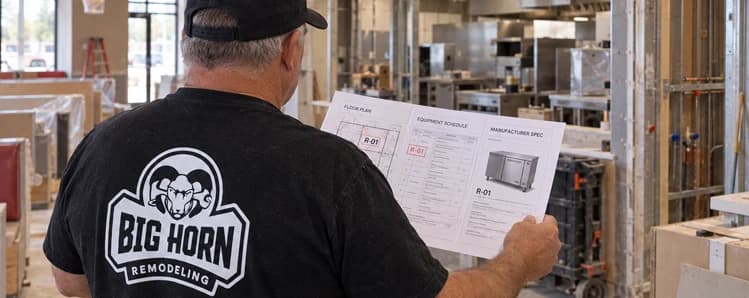
Check 3: Sink functions and staff access are clear
Identify what each proposed fixture is for: handwashing, food preparation, warewashing, beverage disposal, or janitorial use, as applicable. Review the layout against the activities described in the operating brief. A fixture shown on a drawing does not, by itself, explain whether it supports the intended task or remains accessible during service.
For the owner, the useful question is operational: “When someone performs this task, where do they go next?” Give the design team that answer. Have the required fixture types, arrangements, connections, and access verified against the applicable regulations. Avoid assuming that one sink can serve every function.
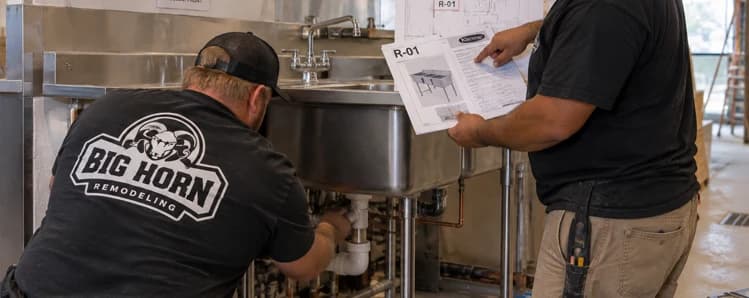
Check 4: Water and drainage information matches the selected equipment
Compare the plumbing information with the equipment schedule, including appliances that need water, drainage, or other connections. Flag any item whose requirements are still marked “to be determined.” Identify who is responsible for resolving it before the package is issued.
Hot water demand should be evaluated for the proposed operation and fixtures. SNHD publishes a water heater calculator in its resource library; use the current tool and appropriate professional review rather than treating an existing tank size as proof of adequacy. The same principle applies to equipment draining to existing facilities: verify the proposed arrangement rather than assuming a nearby drain makes it acceptable. SNHD Plan Review Resource Library
Check 5: Storage reflects the anticipated operation
Compare cold holding and dry storage with:
- The anticipated food volume.
- The receiving pattern.
- The preparation activities.
Ask where an actual delivery goes and what happens when the business is busy. These planning questions make missing storage assumptions easier to find before they become changes in the field.
SNHD also provides refrigeration and dry storage calculators. They are useful references for evaluating capacity, not evidence that any particular project has been approved. Keep the inputs consistent with the operating description submitted for review. SNHD Plan Review Resource Library
Check 6: Finishes are identified for the actual rooms and tasks
Use a room-by-room finish schedule that can be compared with the plan. Identify the proposed surfaces where food preparation, washing, storage, and other activities will occur. The design professional should verify applicable cleanability and material requirements.
For the installation details behind a floor finish schedule, see our restaurant flooring guide. It covers substrate preparation, cove bases, drains and equipment interfaces; it does not replace SNHD review of the proposed work.
Check 7: Shared issues have an identified decision maker
Some questions cross agency and design responsibilities. Cooking equipment, ventilation, fire protection, wastewater, and grease management are examples.
For example, the owner selects a proposed cooking appliance; the appropriate designers evaluate its requirements; the relevant authorities review their scopes. “Someone is checking the hood” is not a complete handoff. This guide does not prescribe hood types, interceptor sizes, or engineering details.

Coordinate unresolved decisions
Record the unresolved question, the party responsible for the answer, and the document that will carry it into the plans. The useful outcome is a coordinated decision reflected in the submitted package.
5. Submit through the current EH Portal and manage the record
SNHD moved Environmental Health applications and permit management to its online portal on April 27, 2026. Its current portal page requires an account and provides tutorials for applications, payments, delegates, and other functions. Use the current online instructions, even when an older reference PDF mentions an earlier process. Environmental Health Portal
For a permit application, the current Plan Review page directs users through Home → Create → Create New → Apply for a Permit. Gather the required documents and applicable questionnaire first. SNHD says applications are processed in the order received. A submission confirmation records the application; it does not mean the plans or opening have been approved. SNHD Plan Review
A practical review record
Keep one shared record of the submitted files, correspondence, fees, and open questions. Assign responsibility for checking the application and routing reviewer comments. Use SNHD's current portal tutorials if another project participant needs account access or delegate permissions.
When comments arrive, respond to the actual question and identify the revised document or sheet. The following is an internal tracking format; it is not represented as an SNHD-required form.
| Field | What to record |
|---|---|
| Comment reference | Reviewer, date, and the exact comment identifier if one is provided. |
| Decision | The clarification or change that resolves the issue. |
| Affected documents | Plan sheet, equipment item, specification, menu, or operating procedure. |
| Responsible person | The person preparing the answer and anyone whose information must change. |
| Reply and status | Date returned, current status, and the agency's response when received. |
Before resubmitting, check that the answer and revised files agree. If a specification changes, ask whether the equipment schedule, layout, plumbing information, or operating description also needs revision. Keep the prior issue available for reference, but make the current submission unmistakable.
6. Handle changes as changes to the reviewed operation
An equipment order or menu decision made after submission can change what the application describes. SNHD's preoperational review checks the facility against approved plans and approved modifications. Keep proposed substitutions and field changes visible to the owner, designers, and reviewer as applicable. Food Regulations, § 8-203
Example: Adding espresso service after the first submission
Suppose a restaurant adds espresso drinks to its opening menu. The useful first step is not simply adding an appliance symbol. Confirm the proposed preparation activity, equipment specifications, water and drainage connections, cleaning arrangements, and any effect on the submitted operating information.
Make a change list showing which documents are affected, then ask SNHD what revision or additional review is required. The point is to show the complete change. This hypothetical example does not mean every espresso installation has the same requirements.
Example: Replacing a failed refrigerator
An appliance with similar dimensions is not automatically an accepted like-for-like replacement. SNHD has a specific request process for qualifying equipment at a facility with an active health permit. It asks for the existing and replacement make and model, requires compliant equipment and installation, and allows SNHD to determine whether the request qualifies or needs remodel review. Like-for-Like Equipment Replacement Request
Preserve that determination with the equipment records. If the replacement also moves location or changes the operation, make those facts clear rather than describing the project only as a refrigerator purchase.
Example: Taking over a restaurant and expanding the menu
Suppose a buyer keeps most of the kitchen but proposes new preparation activities and more food storage. Separate the ownership question from the proposed operational changes. Provide the new owner information and describe what the next operation needs; do not assume the former operator's menu or permit settles the review.
7. If the restaurant remains open, address food protection early
Work inside an operating restaurant creates an additional question: how food, utensils, equipment, and customers will be protected while the work occurs. SNHD distinguishes major and minor remodels and discusses continued operations and food protection contingencies. A project that does not require a building permit can still raise SNHD remodel questions. SNHD major and minor remodel guidance
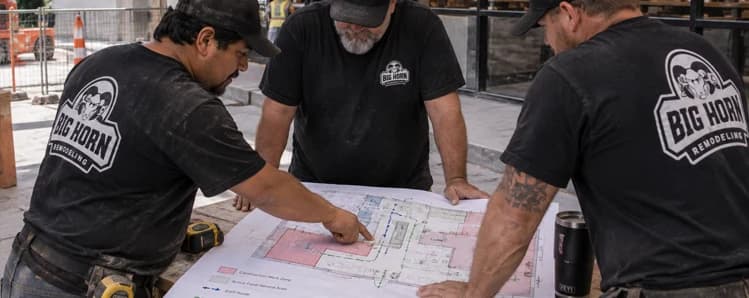
For planning, map the work area and the proposed operating area. Identify and describe:
- Which routes, sinks, storage spaces, utilities, and cleaning functions would be affected.
- When the work would occur.
- What the business proposes to keep operating.
Bring that information to SNHD before assuming that barriers or work after closing will be sufficient.
The operating plan must follow the applicable agency direction. This is not permission to operate through a remodel, and a construction schedule alone is not a food protection plan. SNHD's remodel scope guidance is a useful starting point when the work appears small but changes equipment, processes, layout, or finishes.
8. Plan around application clocks and the current agency fees
Thirty days is a minimum lead time for the application
SNHD's food regulations require submitting the permit application at least 30 calendar days before the proposed opening. They do not establish a universal 30-day turnaround. The actual path can include questions, revisions, construction, other required approvals, and inspection readiness. Food Regulations, § 8-302.1
To place reviews alongside procurement, construction and final handoffs, see our restaurant planning-to-opening timeline.
Build the opening plan around milestones you can verify: complete submission, resolved review, current approved documents, completed work, required agency approvals, and the final health permitting outcome. Keep a proposed opening date distinct from a confirmed ability to operate.
Track the application expiration separately
Under § 8-302.2, applications associated with new establishment construction or remodeling expire one calendar year after receipt unless SNHD grants an extension before expiration. The general rule for other applications is 180 calendar days, subject to the regulation's exception and extension provisions. Confirm the applicable deadline on your record if the project pauses. These are application deadlines, not the term of an issued health permit. Food Regulations, § 8-302.2
Check the current fee schedule before budgeting or booking
The fee schedule checked for this guide is effective July 1, 2026. Three examples from its miscellaneous fee section are shown below. They are not a total restaurant application price or a prediction that every project incurs them. SNHD Environmental Health Fee Schedule, page 16
| Fee description | Schedule code | Listed fee |
|---|---|---|
| Plan review reinspection | 8904 | $329 |
| Plan resubmittal/revision | 8905 | $329 |
| Missed appointment | 9008 | $329 |
Confirm the applicable charges and current invoice with SNHD. Agency fees are separate from design, construction, and other jurisdictions' charges. The practical preparation step is to resolve outstanding questions and verify readiness before requesting an inspection; these examples are not a build out cost estimate.
9. Prepare for the final permitting inspection with evidence
SNHD's preoperational inspection checks more than whether the construction looks finished. The regulations address conformance with approved plans and modifications, operating procedures, and applicable requirements. Its final permitting checklist also identifies utilities, plumbing, equipment, finishes, updated plans, and other agency approvals among the readiness items. Food Regulations, § 8-203; Minimum Requirements for Final Permitting Inspections
Use the table below as an internal walk-through aid alongside the official checklist and project-specific directions. Assign each open item to a person, and close it with an identifiable answer. The “evidence” column describes a useful team record, not a new documentation requirement imposed by this guide.
| Readiness area | Question before requesting the visit | Useful team evidence |
|---|---|---|
| Current plans | Does the completed space match the approved layout and approved changes? | Current approved set and required updated drawings submitted to SNHD. |
| Utilities and fixtures | Are the required systems and fixtures installed, functional, and accessible? | Completed walk-through and confirmation from the responsible trade or professional. |
| Equipment and storage | Are the correct items installed and ready for the proposed operation? | Equipment identifiers, installation information, and resolved substitutions. |
| Surfaces and completion | Are the applicable finishes complete and the facility ready for its intended use? | Closed punch items and a room-by-room check. |
| Other approvals | Are the approvals required for this project available? | Applicable building, fire, occupancy, wastewater, or other records requested by the agencies. |
| Operating readiness | Can the person in charge explain the proposed menu and applicable procedures? | Current menu and the operation's required procedures and personnel documentation. |
Do not treat a blanket checklist as proof that every listed system is required in the same form for every restaurant. Confirm the requirements for the actual menu, equipment, location, and approved scope. Likewise, do not assume a building final automatically issues the SNHD health permit.
Keep the person in charge and the team members who can answer outstanding facility questions available for the inspection process. Record any correction and follow the agency's direction for resolution. A valid health permit is required to operate; scheduling an inspection or completing construction does not provide that permission. Food Regulations, §§ 8-301-8-303
Coordinate food deliveries with the permitting outcome. SNHD's current questionnaire says a food establishment may not stock food or operate without a valid health permit. Ask SNHD about the readiness arrangements for your record before scheduling inventory delivery for a new opening. Food Establishment Questionnaire
10. A local project lesson: the former use is only a starting point
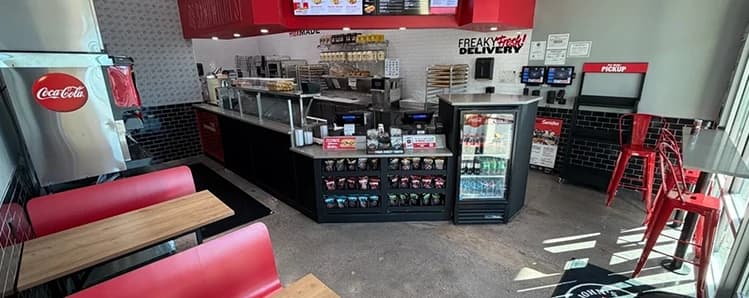
Our Jimmy John's dental office conversion documents a Las Vegas space changed from a dental office to a sandwich restaurant. The case study illustrates why the previous use of a space does not describe the infrastructure the next food operation will need.
For SNHD preparation, the takeaway is specific: record the existing conditions, then explain the proposed food operation and its equipment. An old floor plan or a broker's description of the space is a starting reference; the review package needs to explain what the restaurant will actually do.
Official resources used in this guide
- SNHD Plan Review and current application instructions
- SNHD Food Regulations: plan submission, inspection, and permit requirements
- Current plan review questionnaires
- Plan Review Resource Library and capacity calculators
- Environmental Health Portal tutorials
- Minimum requirements before a final permitting inspection
- Environmental Health fee schedule
Put the reviewed information to work
Before moving forward, assemble four things: the proposed menu and operating description, the existing and proposed equipment information, the appropriate application materials, and a clear list of unresolved decisions. Those give the owner, designers, and agency a shared description of the restaurant being proposed. When you are ready to connect that preparation to construction, visit our restaurant and bar build outs page to review Big Horn Remodeling's services and discuss the project. For application requirements and record-specific questions, contact SNHD Plan Review at FoodRev@snhd.org or (702) 759-1258. Big Horn Remodeling is an independent contractor, not SNHD. This guide explains preparation steps; SNHD and the other applicable authorities determine the requirements and approvals for your project.