Contact Us and Get a Free EstimateFree Estimate Today!

Share your details and our team will contact you shortly with a free consultation.

Big Horn Remodeling pulls retroactive permits, also called after-the-fact permits, across Clark County, the City of Las Vegas, Henderson, and North Las Vegas. As a licensed Nevada general contractor (B-2 License #0091383), we validate construction already completed without permits and coordinate the plans, corrections, permitting and inspections needed to bring existing work through the approval process.
Share your details and our team will contact you shortly with a free consultation.
If you got a notice of violation or a code violation notice from Clark County Code Enforcement, the City of Las Vegas, or Henderson; if a fire inspection failed when you tried to open a new business license; if a title company flagged an open or expired permit during closing; or if you're staring at unpermitted construction someone else left behind and you don't know where to start, that's the work we do every week. We coordinate plan submittals, draft as-built drawings, work with structural engineers when stamping is required, attend inspections, and bring projects from in violation to final approved. We also assemble documentation packages that include field photos, prior invoices, scope verification notes, and jurisdiction correspondence so reviewers can confirm what exists today and what corrective scope is still required. When hidden conditions are uncovered, we sequence demolition, corrective work, and trade inspections in the right order to avoid repeated rework and prevent approval delays. Our team manages each stage from intake through closeout: code review, drawing coordination, permit filing, correction responses, inspection preparation, and final sign-off. This process protects owners from stalled transactions, financing issues, appraisal setbacks, appraiser objections, and ongoing enforcement exposure tied to unresolved permit history.
~$2,300
typical cost to permit a small remodel correctly the first time
~$4,500
typical cost to resolve and re-permit an unpermitted job
Numbers are illustrative ranges based on real Big Horn projects. Actual cost depends on jurisdiction, scope, and condition.
A building permit is not a tax. It’s third-party verification that the people working on your home or business were licensed, that the materials and assemblies meet current code, and that a city or county inspector has signed off on the hidden work - the rough plumbing, the electrical, the framing, the waterproofing - before it gets buried behind drywall and tile. In Las Vegas, where almost every home is slab-on-grade and where summer roof temperatures can exceed 160°F on a black shingle, the assemblies underneath your finishes have to be right the first time. There is no second look once tile goes down. Skipping permits creates four specific problems that all show up later, and almost always at the worst possible moment:
Planning a new conversion rather than fixing an existing unpermitted one? See our Las Vegas garage conversion service.
Code Enforcement: Clark County Code Enforcement (the Public Response Office at 702-455-4191), the City of Las Vegas Code Enforcement office, and the Henderson Code Enforcement Division respond to complaints, aerial imagery flags, and routine inspections. If a property is cited, you receive a written code violation notice listing the code section, the violation, and deadline.
Title and resale problems: A title company or escrow officer can flag permit history at closing. If permits are missing for visible work - a converted garage, a built-out casita, an enclosed patio, a finished basement, a bathroom remodel , or a kitchen remodel - the deal can stall or fail. Appraisers often will not count unpermitted square footage as living area, which can lower appraisal value and trigger lender conditions. FHA and VA loan scenarios are commonly delayed or denied when permit issues remain unresolved.
Insurance denial: When a homeowner’s insurance carrier investigates a claim - fire, water damage, or slip-and-fall - they review permit history. If the work tied to the loss was unpermitted, claims can be denied. This is not theoretical; we’ve consulted on denied claims linked to unpermitted electrical and plumbing modifications.
Failed fire inspections on commercial leases: When a new tenant opens a business and the city does a fire/life-safety walkthrough for the business license or certificate of occupancy, they compares the building to approved plans. Unplanned walls, occupancy changes, missing exit signage, blocked egress, unpermitted electrical, and fire sprinkler discrepancies are flagged. For detailed commercial scope, review our tenant improvements page.
If your property has open violations or unpermitted work, we can map the exact path to compliance and final sign-off. If you are selling, listing, or trying to close escrow, we can often target a 4-week pre-listing permit timeline on straightforward scopes. Contact us today and get a clear, permit-ready action plan.
If you received a code violation notice, notice of violation, or code enforcement letter for unpermitted construction in Las Vegas, Clark County, Henderson, or North Las Vegas, the most important thing is to respond before the deadline and establish a clear path to compliance.
In many cases, the work does not automatically have to be removed. The resolution may involve documenting what was built, preparing as-built plans, obtaining a retroactive or after-the-fact permit, completing any required corrections, and passing the inspections needed to close the case.
Big Horn Remodeling can take over the permit-resolution process.
Send us a photo or PDF of the violation letter and we can review the cited issue, confirm the jurisdiction and compliance deadline, inspect the existing work, and determine what the building department will likely require to bring the property into compliance.
We identify the cited violation, the assigned agency or officer, the required response date, and whether the issue is tied to unpermitted construction, expired permits, plan discrepancies, or another building-code concern.
With the owner’s authorization and where the jurisdiction allows, we can communicate that a licensed contractor is actively working toward compliance, clarify the expected correction path, and keep the officer informed as plans and permits move forward.
If plans, engineering, permit review, or corrective construction cannot reasonably be completed before the original deadline, we can ask the assigned official for an extension or adjusted compliance timeline. Extensions are discretionary and are not guaranteed.
We document existing conditions, prepare or coordinate as-built plans, obtain engineering when required, and submit the permit package to the correct jurisdiction.
If the inspector requires access to concealed work or identifies code corrections, we coordinate the construction and inspection sequence through final approval and permit closure.
Code enforcement cases can escalate when a notice is ignored or the property does not move toward compliance. Depending on the jurisdiction and violation, enforcement can include administrative citations, civil penalties, abatement action, or other legal remedies. Prompt communication and documented permit progress can demonstrate good-faith compliance and may support a request for additional time, but filing a permit does not automatically stop fines or suspend enforcement.
Got a violation letter? Call or text Big Horn Remodeling at (702) 799-9902 or send us a copy of the notice. We can review the letter, identify the permit path, and help manage the process from code-enforcement communication through final inspection.
We confirm the completed or planned work, pull the latest records on file with the jurisdiction, and identify the applicable code requirements. If the work is already installed, we perform a full site walk, document existing conditions, and flag any visible compliance concerns before submittal.
Most retroactive permits require the same documents used for new construction, with extra detail when needed. We prepare as-built drawings showing existing and proposed conditions, including structural, electrical, plumbing, and mechanical details based on scope and code.
We submit the permit package, respond to plan-check corrections, coordinate revisions, and manage jurisdiction fees. Fee treatment for after-the-fact work varies by jurisdiction, scope, and any active amnesty program for which the project may qualify; we confirm it before submittal.
After permit issuance, the city inspector verifies the completed work matches the approved drawings and complies with current code requirements. In some cases, inspectors may require limited wall openings or testing to confirm concealed work before final approval and permit closure are issued.
This is the most underrated reality of permit work in Las Vegas: a homeowner or business operator usually doesn’t choose to skip permits. They hire a contractor who promises a faster, cheaper path by skipping the paperwork. The work goes in. A year passes, or three, or ten. Then something triggers a review - a sale, a refinance, a remodel that requires a permit and exposes prior work, a neighbor complaint, a fire inspection - and the bill comes due.

What happens if you didn’t pull permits on a job? Don’t sweat it, the City of Las Vegas and Clark County jurisdictions are ok with Retroactive Permits. Retroactive permits are when you pull permits on a job, after it’s done. We compile plans with the work that was previously there to the best of our ability, and the way it is now and submit it to the city as “as is built” plans. We’ve done it many times with success. Any photos, videos or information you have about the way it was built is helpful in fabricating the plans, but we’ll work with what you have.
Validation letter from Clark County: An after-the-fact permit is required for the unpermitted construction at the subject property. All work shall be brought into compliance with the currently adopted Clark County Building Code, including any required structural, electrical, plumbing, or mechanical inspections. Failure to comply will result in additional enforcement action.
That’s a real example of the language in the notices we see. Translation: pull the permit, prove it’s safe, or take it back out.
To bulk-class the property and confirm prior work was done correctly and safely, the jurisdiction will require an inspector to physically verify the work that was done. Their inspectors are licensed third-party reviewers; their job is to look at what your previous contractor (or former owner, or previous tenant) actually built and decide whether it meets code or has to come back out.
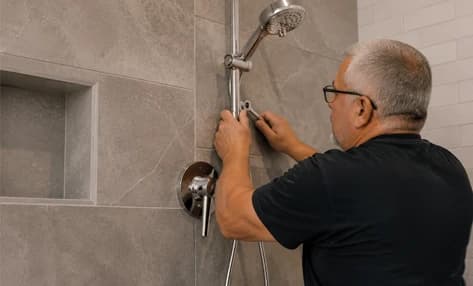
In 2025, we rebuilt more than 70 showers in homes remodeled within the last decade because installs failed inspection or were never inspected at all. Las Vegas water carries heavy mineral content, and shower assemblies built without bonded membranes (Schluter Kerdi or equivalent), pre-sloped pans, and code-compliant valves can wick moisture through grout into framing within a few years. During retroactive reviews, inspectors opening tile or drywall regularly find rotted subfloor, mold growth, and supply lines that were never anchored or pressure-tested.
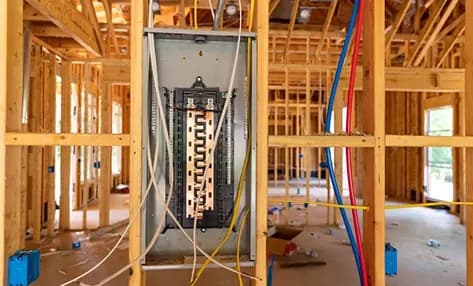
After-the-fact electrical inspections expose more failures than any other trade. Common findings: aluminum-to-copper splices done without proper connectors, undersized wire feeding new circuits, missing GFCI/AFCI protection in bedrooms, kitchens, and bathrooms, junction boxes buried in walls without access, panel work performed by unlicensed handymen, and missing arc-fault breakers on circuits that current Nevada code requires them on. Every one of those is a fail.

Removed walls, modified beams, attic conversions, garage-to-living conversions, casita additions, room divisions, and shifted load paths all trigger structural review. If structural drawings were never stamped by a Nevada-licensed engineer when the work was completed, we coordinate retroactive engineering, install required reinforcement, and submit stamped calculations as part of the after-the-fact permit package. This process gives the jurisdiction a verifiable structural basis for approval instead of relying on assumptions about concealed framing conditions.

When a retroactive permit includes structural scope - beam sizing, header replacement, load transfer, foundation modification, second-story additions, large openings, or exterior wall removal - the jurisdiction requires stamped plans from a Nevada-licensed engineer or architect. We work with engineers who field-verify completed conditions and stamp the as-built plans for submittal. In most completed-job cases, that as-built stamped package is the fastest path to permit issuance, inspection scheduling, and final compliance closure.

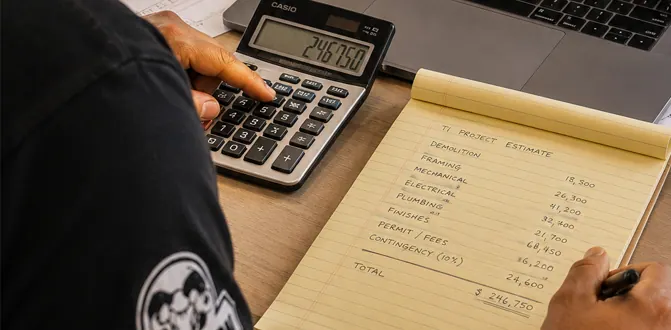


Permitting costs are tied to what the jurisdiction has to verify, not just the filing fee. A simple electrical or plumbing permit can stay relatively small, while retroactive remodel work may require as-built drawings, plan review, inspections, corrections, and coordination with the City of Las Vegas, Clark County, Henderson, or North Las Vegas. The final cost depends on which jurisdiction controls the property, whether plans or engineering are required, whether walls must be opened for inspection, any applicable permit, plan-review, investigation, or penalty fees, whether the original work was done to code, and how much corrective construction is needed.
Permit Scope
Typical Range
Permit Scope
Simple single-trade permit, electrical/plumbing only
Typical Range
$750-$1,500+
Permit Scope
Basic remodel permit package
Typical Range
$2,000-$4,500+
Permit Scope
Retroactive permit for unpermitted remodel work
Typical Range
$3,500-$8,500+
Permit Scope
Retroactive permit package for an already-built garage conversion, casita, structural alteration, or addition
Typical Range
$5,000–$10,000+
These figures are for permit-resolution/as-built coordination and are not the construction cost of a new garage conversion. Planning a new garage conversion? See our Garage Conversion Las Vegas service page.
Permit Scope
Commercial failed fire inspection / retroactive TI permit
Typical Range
Custom quote
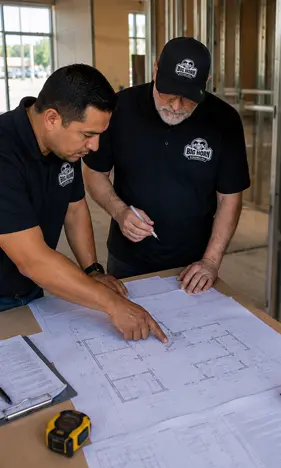
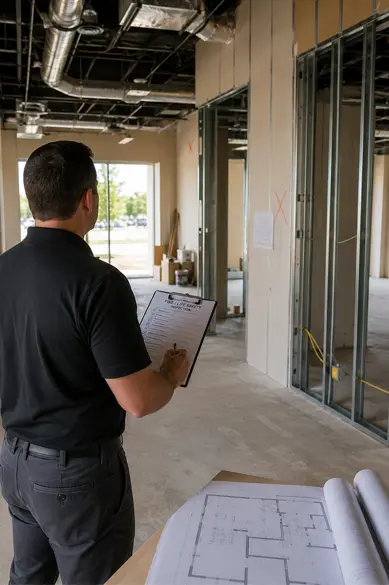
A second large pillar of our permit work is commercial. Here’s the typical scenario: A new tenant signs a lease on a 2,400 sq ft retail or office space. They apply for a business license. The city schedules a fire/life-safety inspection. The inspector arrives, looks at the space, and compares it to the plans on file with the City of Las Vegas, Clark County, or Henderson - and the plans don’t match. Maybe a previous tenant built non-permitted demising walls. Maybe an office was carved out of warehouse space without a tenant improvement permit. Maybe a doorway was added or removed. Maybe a kitchen was installed without grease trap, hood, or fire sprinkler permits. Maybe occupancy classification changed (B to A-2, for example) without a change-of-use permit.
The inspector fails the inspection.
The business license is held.
The lease keeps running.
The tenant calls us.
We pull a tenant improvement (TI) permit retroactively, draft as-built and proposed drawings showing existing and proposed conditions, coordinate any required corrections (egress, signage, fire sprinkler modifications, electrical, occupancy), and walk it through plan check and re-inspection. In most cases we can get a business operating in 4 to 8 weeks. In urgent cases - restaurant openings, medical tenants, retailers under construction deadlines - we work directly with the assigned plan reviewer to expedite. If you need the full commercial workflow, see our tenant improvements page.
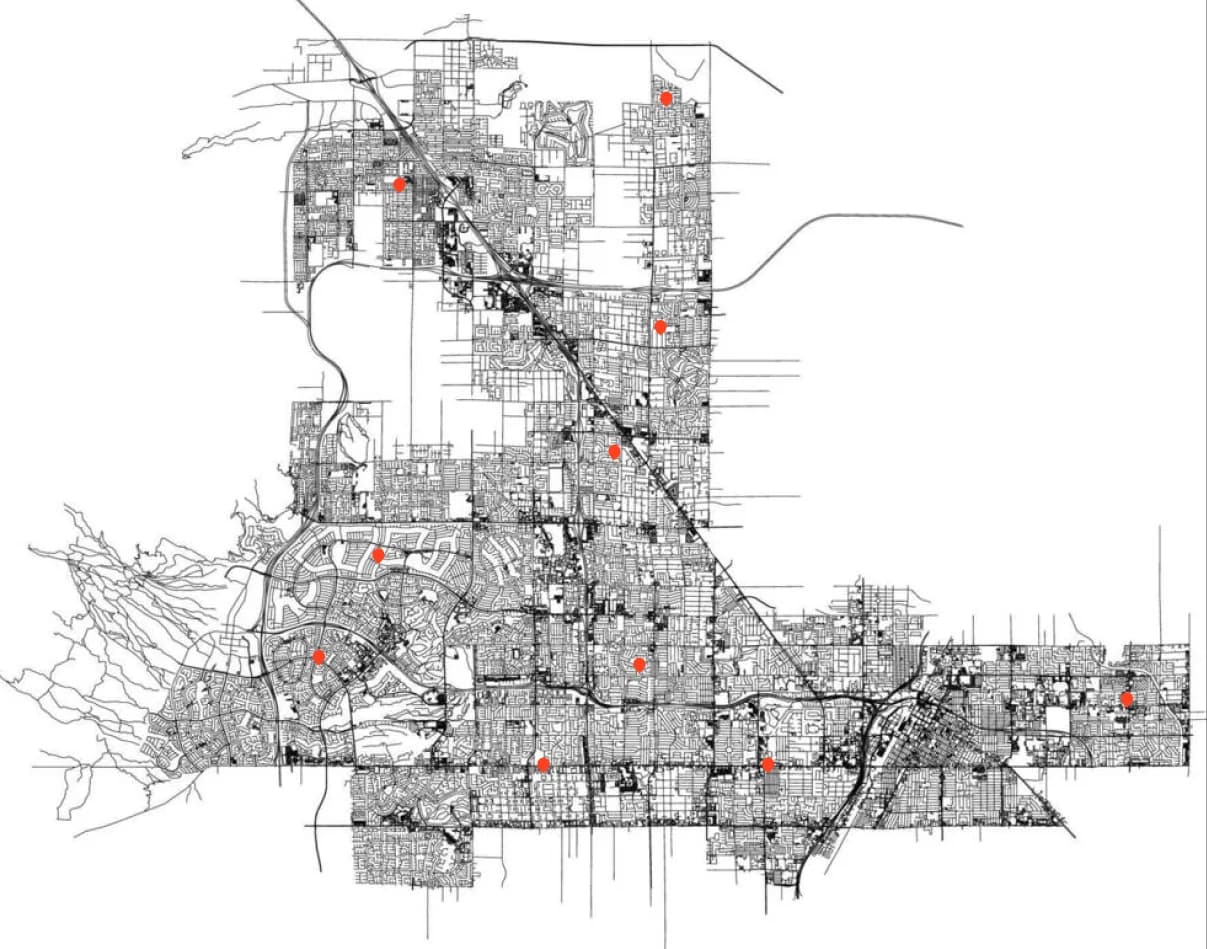
Jurisdiction is the first decision in any retroactive permit. In Las Vegas, the same scope can trigger different forms, fees, correction language, and inspection steps depending on the reviewing authority. We confirm jurisdiction by exact address before any submittal.
We handle permits across all four jurisdictions below, including the neighborhoods and ZIP clusters most commonly tied to after-the-fact permit cases.
Covers Downtown Las Vegas, the Arts District, and city-limit portions of Summerlin. Typical ZIP clusters include 89101, 89102, 89106, and 89135. Retroactive permits run through City of Las Vegas Building & Safety. Fee treatment depends on how the unpermitted work comes into compliance. The City currently publishes a year-round homeowner self-disclosure/amnesty program that can eliminate penalties for qualifying cases; standard permit, plan-review, and project-specific costs can still apply.
Covers most unincorporated areas including Paradise, Spring Valley, Enterprise, Centennial Hills, Mountain's Edge, and Southern Highlands. Common ZIPs include 89117, 89118, 89134, 89135, 89139, 89141, 89148, 89149, and 89178.
Covers Anthem, Green Valley, Seven Hills, Inspirada, MacDonald Highlands, and Lake Las Vegas. Common ZIPs include 89002, 89011, 89012, 89014, 89015, 89044, 89052, and 89074. Henderson's fee treatment varies, and the City has periodically offered residential amnesty programs that waive penalty fees. Current fees and any active amnesty should be confirmed before quoting a retroactive-permit scope. See our Henderson page for local scope details.
Covers Aliante and nearby northern valley neighborhoods, plus portions of Centennial and legacy residential tracts. Common ZIPs include 89031, 89032, 89084, and 89086. North Las Vegas often uses a streamlined review path and may allow video inspections for qualifying scopes.
Address determines jurisdiction, not ZIP code. Some ZIPs straddle two jurisdictions. If you call us with the address, we'll confirm in 30 seconds and tell you exactly what's required.
Before you call, check the public records yourself — both tools are free and search live government sources.
Look up the permit history for any property. One search finds the right jurisdiction — Las Vegas, Henderson, North Las Vegas or Clark County — and checks its live records.
Search property permits →Verify a contractor’s Nevada license — status, classification, monetary limit, discipline and local permit history — before you hire or investigate.
Verify a contractor →This page covers resolving permits for work that already exists. If you need a reviewable drawing package prepared for proposed construction, that is its own service.
Still have questions about your project? Click the button to get a free consultation and our team will help you with scope, timeline, and next steps.