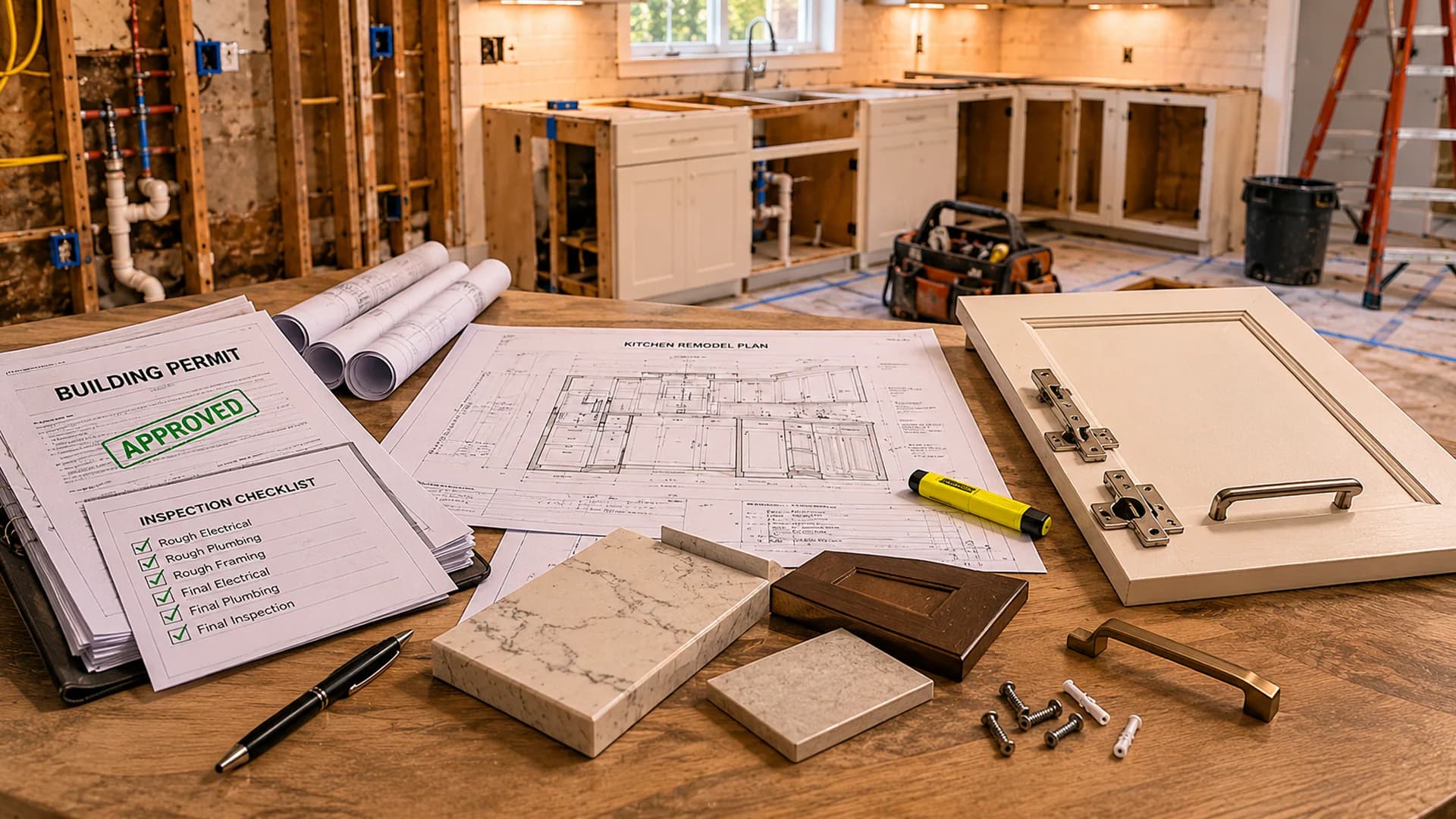

Short answer: A permit for a kitchen remodel in Las Vegas is usually needed when the work changes electrical, plumbing, gas, mechanical, ductwork, walls, framing, openings, or layout. Same-footprint finish updates may not trigger permits, but any hidden-system or structural change should be reviewed before demolition starts.
You may need a permit for a kitchen remodel in Las Vegas if the project adds, removes, relocates, or alters electrical, plumbing, gas, mechanical, ductwork, walls, framing, openings, or other architectural elements.
If the project is only a like-for-like cabinet replacement with no utility, wall, or mechanical changes, a permit is usually not the issue. The moment the remodel touches hidden systems or changes the layout, permits should be reviewed before demolition starts.
Permit decision checklist
Review permits before demolition if your kitchen remodel includes any of the following: moving a sink or drain, adding or relocating outlets, adding island power, changing lighting circuits, relocating a gas range, changing range hood ducting, removing or widening a wall/opening, changing windows/doors, or exposing concealed work that must be corrected before it is covered.
If the answer is yes to any item, permit review is needed before work starts.
Permit answer snapshot
Usually no permit
Same-footprint finish-only work with no utility, wall, mechanical, or layout changes.
Review permit
Electrical, plumbing, gas, mechanical, ductwork, framing, openings, or layout changes.
Confirm jurisdiction
City of Las Vegas, Clark County, Henderson, and North Las Vegas are not always the same.
A kitchen remodel looks simple from the outside. New cabinets. New countertops. Better lighting. Maybe a bigger island. But behind the finished kitchen are the systems that determine whether the remodel was done legally and safely: electrical, plumbing, gas, mechanical ventilation, framing, and structural conditions. If you are still defining the written scope, use our kitchen remodel scope checklist.
At Big Horn Remodeling, we look at permit requirements during planning because permits are not just paperwork. In the City of Las Vegas, permitted work can trigger inspection checkpoints where an inspector physically comes to the property and validates that the work was completed to code before it is covered up or finalized.
If permit review is part of a larger renovation, our Las Vegas kitchen remodeling services combine scope planning, permit coordination, licensed trade sequencing, inspections, and construction under one contractor.
General guidance disclaimer
The 4 Permit Triggers For A Las Vegas Kitchen Remodel
In Las Vegas, a kitchen remodel should be evaluated by scope. A project that keeps the kitchen exactly where it is and only replaces visible finishes is very different from a project that moves the sink, adds under-cabinet outlets, installs a new island with power, relocates a gas range, or removes a wall to create an open-concept kitchen.
Permit trigger formula
Electrical changes can include new outlets, relocated outlets, dedicated appliance circuits, under-cabinet lighting wiring, recessed lights, island power, panel-related work, and any wiring that will be concealed. Plumbing and gas changes can include moving the kitchen sink, relocating a dishwasher, adding a pot filler, moving a refrigerator water line, relocating a gas range, or cutting the slab for drain work.
Mechanical work often relates to range hood ductwork, make-up air considerations, exhaust routing, or HVAC adjustments caused by layout changes. Architectural and framing changes include removing walls, widening openings, changing headers, modifying windows or doors, changing the ceiling plane, or creating an open-concept layout.
See the documented Cantabria project where the sink and dishwasher moved about six feet to a new island under a City of Las Vegas plumbing permit.
Field note from Nathan
When You Probably Do Not Need A Kitchen Remodel Permit
A permit is less likely to be required when the project is truly cosmetic and stays in the same footprint. For example, a basic cabinet replacement may be fine when the cabinets go back in the same locations and no electrical, plumbing, gas, ductwork, mechanical, or architectural changes are made.
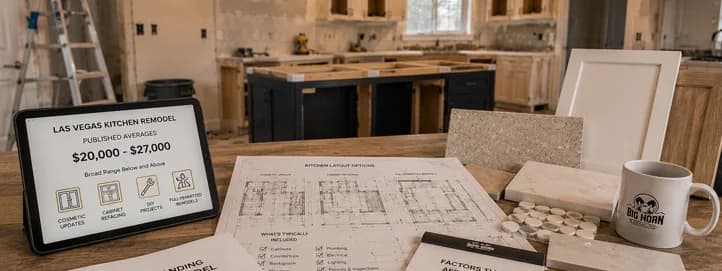
Homeowners should be careful with the phrase "just cabinets." Cabinet changes often become permit-triggering projects when the new layout changes appliance locations, adds an island, covers existing outlets, requires new outlets, moves the sink, changes the range location, or modifies a wall to fit the new design.
Why Permits Are Worth It On A Kitchen Remodel
Permits are easy to frame as a cost, but that is the wrong way to look at them. On a real kitchen remodel, a permit is closer to a risk-control tool. It creates documentation, inspection checkpoints, and a formal record that the work was reviewed through the local building process.
Legal pathway
Required scope
If the remodel includes regulated work, skipping the permit is not just a preference. The project may be out of compliance with local requirements.
Inspection layer
Hidden work
The most important kitchen work is often hidden before the remodel looks finished. Inspection gives another checkpoint before systems are covered.
Project record
Cleaner file
A permit record helps connect the work to a real, accountable contractor instead of leaving the homeowner with undocumented hidden work.
Many homeowners are willing to spend $35,000, $60,000, $90,000 or more on a kitchen remodel, then hesitate over permit costs. If permit coordination costs around $1,500 on a qualifying scope, that may represent only a small percentage of the total remodel budget while protecting the hidden electrical, plumbing, gas, ductwork, and architectural work that can be most expensive to fix later.
Permits can also matter for insurance and resale. A permit is not an insurance policy, but it creates a record that the work went through a formal review and inspection pathway. When the home is sold, permitted kitchen work gives the homeowner a cleaner disclosure conversation than undocumented hidden work.
The Hidden Cost Of Skipping A Permit
Skipping a permit can look cheaper at the proposal stage, but it often transfers risk from the contractor to the homeowner. The work may be covered up before anyone neutral inspects it. The permit record may be missing when the home is sold. If a problem appears later, the homeowner may have to pay to investigate, open walls, create plans, correct work, and pass inspection after the fact.
This is why Big Horn Remodeling treats permitting as a planning issue, not an afterthought. If the scope requires a permit, it should be identified before demolition, before cabinets are ordered, and before trades start moving hidden systems.
Kitchen Permit Cost Versus Remodel Cost
Permit pricing depends on jurisdiction, scope, valuation, plan requirements, trade permits, and whether the work is being permitted before construction or corrected after the fact. The exact number should always be confirmed for the project.

These are not guaranteed prices. They are planning references to help homeowners compare permit decisions against the scale of the remodel. $1,500 is a simple planning allowance for qualifying permit coordination, while broader small-remodel permit support or after-the-fact correction can cost more depending on plans, corrections, and jurisdiction. For broader budget planning, read our guide to how much a kitchen remodel costs in Las Vegas.
Big Horn Remodeling Permit Risk Score For Kitchens
Use this simple scoring tool to understand whether your kitchen remodel should be reviewed for permits before work starts. Add the points that apply to your project.

Need permit clarity before demolition?
Start with a licensed kitchen remodeling contractor in Las Vegas that reviews the scope, jurisdiction, and inspection path before cabinets are ordered.
Common Las Vegas Kitchen Remodel Examples
Cabinet replacement only
Lower concern
New cabinets go into the same layout while the sink, range, dishwasher, outlets, walls, gas, ducting, and lighting stay the same.
New island with outlets
Permit review
Even when the design feels cosmetic, island electrical can trigger permit review because new wiring is installed and concealed.
Sink moves to the island
High review
Moving the sink can involve water supply, drain, venting strategy, cabinet layout, countertop cutouts, and possibly slab work.
Gas range moves
High review
Gas relocation should be reviewed for permit, licensed trade work, clearances, shutoffs, and inspection requirements.
Open-concept wall removal
High review
Removing a wall can affect structure, electrical routing, HVAC, patching, framing, and engineering.
Countertops only
Lower concern
Usually finish work unless the scope changes support, utilities, appliance locations, or structure.
What The Kitchen Permit Process Usually Looks Like
The details can vary by jurisdiction and scope, but most permitted kitchen remodels follow a similar planning path.
Important planning note
City Of Las Vegas, Clark County, Henderson, And North Las Vegas Are Not Always The Same
Homeowners often say "Las Vegas" when they mean the Las Vegas Valley, but permit jurisdiction depends on the property address. A home may be in the City of Las Vegas, unincorporated Clark County, Henderson, North Las Vegas, or another nearby jurisdiction. That matters because submittal procedures, plan requirements, inspection scheduling, and review timelines can vary.
Before giving a final answer on permit requirements, a contractor should confirm the property jurisdiction and then match the permit approach to the actual scope. The City of Las Vegas publishes Building & Safety information for permits and inspections, while Clark County explains that regulated building, electrical, gas, mechanical, and plumbing work generally needs permit review before the work is performed.
Helpful official starting points include City of Las Vegas Building & Safety and Clark County permit guidance.
Why Some Contractors Tell Homeowners Not To Pull Permits
Some contractors avoid permits because permits add accountability. They may not want inspections, plan review, documented trade work, schedule checkpoints, or a record connected to their company. A lower bid can look attractive when it leaves permitting out, but the homeowner needs to understand what is being removed from the project.

- The contractor refuses to put electrical, plumbing, gas, or wall changes in writing.
- The contractor says permits are never needed for kitchens.
- The contractor asks you to pull the permit even though they are managing the work.
- The contractor cannot provide a Nevada contractor license number.
- The bid is much cheaper because permit, plans, licensed trades, and inspection coordination are excluded.
Before you sign, check licensing through the Nevada State Contractors Board. If you are trying to correct already-completed unpermitted work, start with our guide to retroactive permits in Las Vegas.
How Permits Tie Into Home Insurance And Resale
Kitchen remodels involve the same systems that can create the most expensive future problems: electrical, water, drain, gas, ventilation, and structure. If a fire, leak, gas issue, or concealed defect is tied to undocumented work, the lack of permits can make the situation harder for the homeowner.

Permits also matter when the home is sold. Nevada residential sellers use disclosure forms that ask about known property conditions and material issues. Even when the exact disclosure question depends on the current form and transaction, unpermitted work can become a buyer concern because it raises questions about whether the work was inspected and whether future repairs may be required.
A permitted kitchen remodel gives the homeowner a cleaner file: contract, scope, permit record, inspection approvals, photos, and final documentation. That does not guarantee a buyer will never ask questions, but it is much stronger than saying, "We remodeled the kitchen, but there is no permit record."
Should You Pull A Permit For A Small Kitchen Remodel?
If the project is truly small and cosmetic, maybe not. A cabinet, countertop, hardware, paint, or backsplash refresh in the same footprint may not need a full permit pathway. But the moment the project changes hidden systems or architectural conditions, the safer answer is to review permits before work starts.
The bottom line: do not decide based on the project name. Decide based on the scope. A small cosmetic update and a compact but system-heavy remodel are not the same permitting question.
What To Send Us Before We Review Permit Questions
The fastest way to get a useful permit answer is to send enough project context for Big Horn Remodeling to match the address, jurisdiction, and scope. Before demolition or cabinet orders, send the details below so we can flag the likely permit path and the items that need field verification.
Good first message
Big Horn Remodeling Approach To Kitchen Remodel Permits
Big Horn Remodeling is a licensed Nevada general contractor serving Las Vegas and the surrounding Clark County communities. Our kitchen remodel planning process starts with field verification because older and newer Las Vegas homes can have very different conditions behind the same finished walls.

Before construction starts, we review existing layout, appliance locations, branch circuits, plumbing routes, gas needs, ventilation, slab conditions, wall conditions, cabinet dimensions, and inspection requirements. If the project requires permits, we help coordinate the permit pathway so the remodel can move forward with a clear scope instead of guessing after demolition.
Planning a kitchen remodel in Las Vegas, Summerlin, Henderson, Spring Valley, Enterprise, North Las Vegas, or nearby Clark County? Work with a licensed kitchen remodeling contractor in Las Vegas that reviews permits before demolition, not after problems appear.
Need permit clarity before demolition?
Start with a licensed kitchen remodeling contractor in Las Vegas that reviews the scope, jurisdiction, and inspection path before cabinets are ordered.
Final takeaway
You do not need to pull a permit just because you are making your kitchen look better. You need to review permits when the remodel changes the systems and structure behind the finished kitchen. If your Las Vegas kitchen remodel adds, removes, or relocates electrical, plumbing, gas, mechanical, ductwork, or architectural elements, plan for permits before the project starts.
This guide is general guidance, not legal advice. Confirm requirements for your property address and scope before demolition.