Short answer: A change in a commercial space's use or occupancy can require building review and updated occupancy authorization even when no construction is planned. The previous tenant does not establish that your business can occupy it. Before committing to a Las Vegas-area location, compare the approved use of the exact suite with your proposed operation, confirm the permitting jurisdiction, and ask the relevant planning and building authorities which approvals apply. A business license, landlord approval, building permit and certificate of occupancy answer different questions.
This guide is for owners and tenants evaluating an existing commercial space or preparing to open after a conversion. It explains what to verify before treating a location or opening date as settled. The City of Las Vegas business-license guidance specifically recommends checking the proposed use and occupancy before finalizing a location; another business's prior approval does not guarantee yours.
What changes when the business use changes?
Start with the activity, rather than the business name. An office becoming a restaurant is an obvious change. A business keeping its name while adding classes, customer seating, storage or different equipment can also change the questions reviewers need to answer.
Building-code occupancy classification describes how a building or space is used for code purposes. A change of activity can matter even when the occupancy-group label stays the same. ICC's explanation of change of occupancy distinguishes classification changes from changes that increase applicable safety or occupant-welfare requirements. Local adopted codes and amendments determine the actual review.
Do not assign your own occupancy group from a business label or assume that an existing exit, restroom or sprinkler arrangement is sufficient. Have the proposed operation evaluated against the approved records and actual conditions.
Commercial approval terms and their limits
Zoning or land-use approval
- Question it helps answer
Is the proposed activity allowed at this site, including any required conditions?
- What it does not establish by itself
That the building and suite satisfy the proposed occupancy's requirements.
Building occupancy classification
- Question it helps answer
Which code requirements apply to the space and proposed activities?
- What it does not establish by itself
That construction or operation is already authorized.
Building and trade permits
- Question it helps answer
What work is authorized under the reviewed scope?
- What it does not establish by itself
That every required final approval or operating license is complete.
Certificate of occupancy, or CO
- Question it helps answer
What occupancy has the building authority authorized for the approved premises?
- What it does not establish by itself
That unrelated licensing, health or other operating requirements are satisfied.
Temporary certificate of occupancy, or TCO
- Question it helps answer
What occupancy is temporarily authorized under the issued document's conditions?
- What it does not establish by itself
An unconditional right to use the whole property or leave work unfinished indefinitely.
Find the authority for the exact address
A Las Vegas mailing address is not enough to identify the building department. Check the address and suite through the jurisdiction resources linked in the city's business-location instructions. A neighborhood name is not a substitute for that check.
Commercial occupancy contacts by property jurisdiction
City of Las Vegas
Where to begin
Distinction to preserve
The city has an assessment route for use or occupancy changes without construction.
Unincorporated Clark County
Where to begin
Distinction to preserve
The policy calls for a new building-permit application and code analysis for a proposed occupancy change.
City of North Las Vegas
Where to begin
Distinction to preserve
Use that city's review path; another jurisdiction's assessment or owner-change rule is not an exemption here.
City of Henderson
Where to begin
Distinction to preserve
Its application asks for existing and proposed occupancy and the nature of the business change.
These are starting points, not a universal application sequence. Building, fire, planning and business licensing can have separate responsibilities. Landlord consent also belongs in your project records, but it does not replace public approvals.
Does a new tenant always need a new CO?
Not necessarily. The City of Las Vegas CO Assessment guideline distinguishes an unchanged use and occupancy with a new business name or owner from an actual use or occupancy change. Under that city guideline, a name or ownership change alone does not result in a new CO when use and occupancy remain unchanged.
That is a city-specific distinction. It does not mean that every new operator can rely on an old certificate without checking the proposed activities, approved suite boundaries or other licensing requirements. Ask the authority to confirm the applicable path for your facts.
Use the following comparison to frame that conversation. It is a planning aid, not an official eligibility determination.
- 01
New owner or business name; proposed operation appears unchanged
- What to establish before proceeding
Whether approved use, occupancy and premises remain applicable, and which licensing steps still apply.
- Assumption to avoid
Every ownership change requires a new CO, or none requires further checks.
- 02
Same general business type; more occupants or different activities
- What to establish before proceeding
Whether the proposed load, arrangement or equipment changes applicable requirements.
- Assumption to avoid
Keeping the same business category means nothing relevant changed.
- 03
Office, retail or other space becoming a different operation
- What to establish before proceeding
Whether the site permits the activity and what building-code analysis and work are required.
- Assumption to avoid
Existing commercial use permits every other commercial activity.
- 04
No physical alterations planned
- What to establish before proceeding
Whether an assessment or change-of-occupancy submission is still required.
- Assumption to avoid
No demolition means no review.
- 05
First tenant in a shell building
- What to establish before proceeding
Whether base-building completion and the tenant's own approvals support occupancy.
- Assumption to avoid
A finished interior establishes that the whole approval path is complete.
Build a use-and-occupancy record before committing
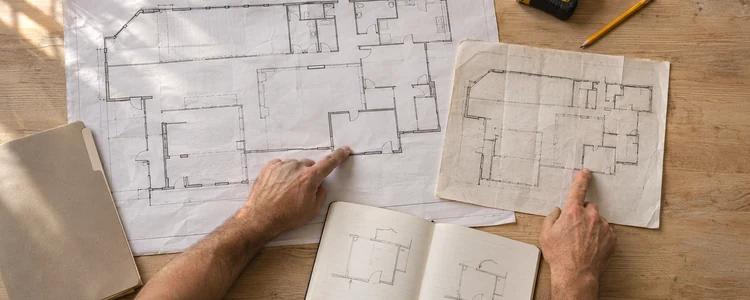
The most useful early deliverable is a clear comparison between what is approved and what you propose. Keep supporting documents and unanswered questions together so the owner, landlord, design team and authorities can discuss the same space.
Request the approved record for the suite
Gather the existing CO when available, prior permit numbers, approved plans, suite boundaries and information about open permits or correction notices. For a shell, also request its completion and final-inspection status. Verify that the records actually identify your premises; a certificate for another unit is not a reliable basis for your decision.
If records are difficult to locate, our Las Vegas permit-record search guide explains where to begin. A record search establishes available history; the authority still needs the proposed operation to determine what applies next.
If the available drawings do not match the space, an as-built record of existing conditions can help document the differences. Measured conditions do not establish approved use or occupancy.
Describe the proposed business precisely
Write a short operating brief with the intended activities, rooms used, approximate staffing and customer capacity, seating or class arrangements, equipment, storage and planned alterations. Identify food preparation, specialized processes or other activities that need their own review.
Clarify the proposed operation
Separate opening-day plans from possible future additions. Saying that a space will remain an office is less useful if the proposal also introduces treatment rooms, training classes or a public event area. Explain the activities so the qualified reviewer can determine their significance.
Record each unresolved difference
Use one comparison sheet rather than relying on a chain of verbal assurances:
Approved records and proposed operation comparison worksheet Review item Existing evidence Proposed condition Question to resolve Approved use and occupancy Prior CO and approved plan references. Activities described in the operating brief. Does the proposal fit, or is a formal change review needed? People and layout Approved capacity and floor plan, where available. Staffing, customers, seating, rooms and circulation. Does the proposal change exiting, fixtures or other requirements? Building systems Available trade plans and verified conditions. Equipment and proposed service demands. Which assumptions need design analysis or field verification? Premises and landlord work Suite limits, shell records and work letter. Tenant area and intended alterations. Who must resolve base-building or shared-system issues? Approval status Permit records, corrections and prior certificates. Requested construction and opening milestones. What authorization is required before the next activity? This sheet is an organizing tool, not a replacement for code analysis or an agency form. Mark missing evidence as unknown. Assign a person to obtain it and retain the resulting answer with the relevant record or plan revision.
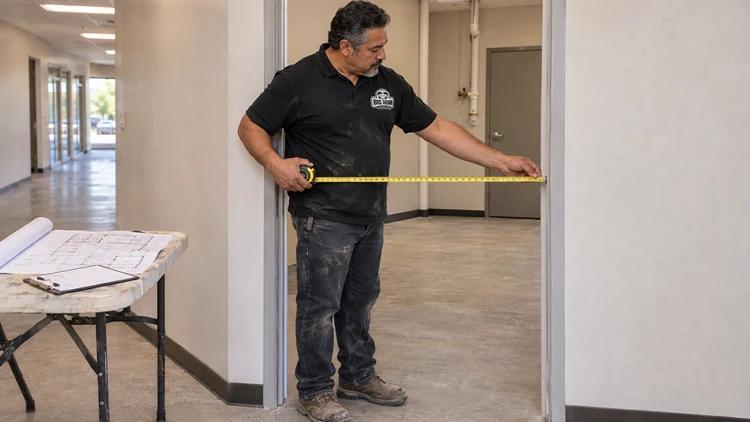
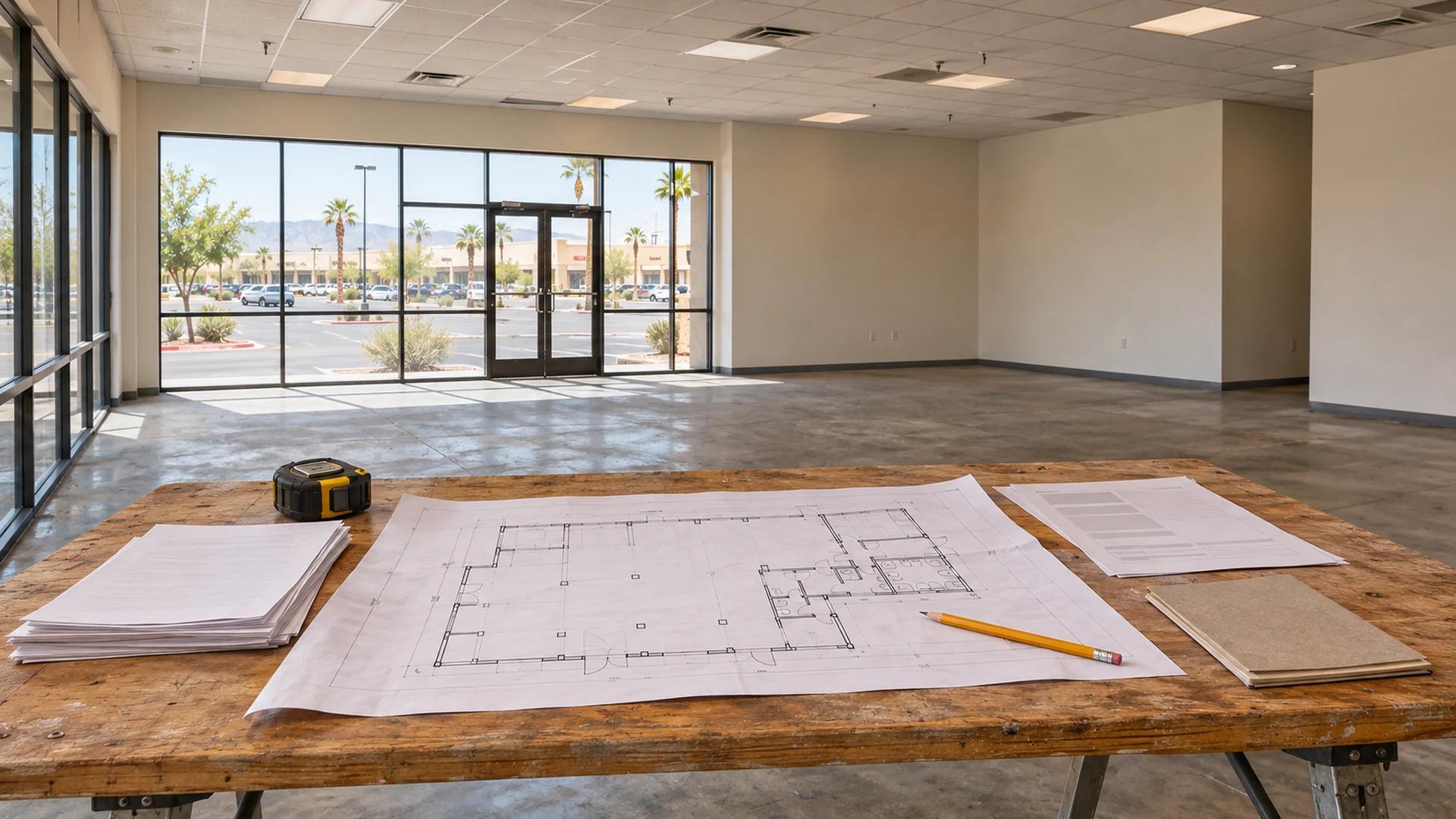
AI-generated illustration: field measurements help compare existing conditions with the project records. Obtain the determination before treating assumptions as facts
Ask Planning whether the proposed activity is allowed, and ask the building authority what review, permits, inspections and occupancy documentation apply. Bring the operating brief and existing records. Have the appropriate design professional or licensed contractor prepare the analysis required for the project.
Carry unresolved construction responsibilities into the landlord discussion. The broader work-letter and delivery process is covered on our tenant improvements page. Lease terms and legal protections should be reviewed with your qualified real-estate and legal advisers.

Read the certificate together with the project record
Big Horn Remodeling's Dulce Donuts case study includes the City's CO for permit C24-01976. That assignment concerned a prior owner's completed, unpermitted restroom removal. It was an existing-work approval case, not evidence of a new commercial use being approved.
Keep the records distinct
Dulce Donuts · Permit C24-01976
- Certificate record
The certificate identifies the premises and permit.
- Enforcement record
The published project account describes a separate communication with the violation handler before the enforcement case closed; the certificate itself does not state that closure.
For your own review, match the certificate to the right property and approved scope, then identify other unresolved records. One approval document should not be treated as an answer to every outstanding question.
If food service is proposed, use our restaurant permits and SNHD plan-review guide for the separate health-review preparation process. A CO does not replace that review.
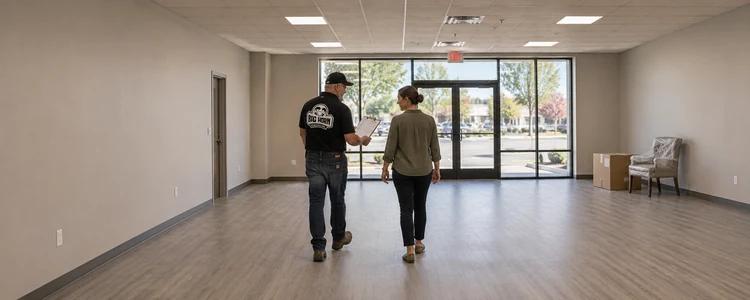
Do not use a construction finish date as permission to occupy
Confirm permission before using the space
Unincorporated Clark County
Stocking
Employee training
Placing furnishings
For unincorporated Clark County, the TCO/CO guidance warns that stocking, employee training and placing furnishings can count as occupancy. Confirm permission before scheduling those activities. A shell's Certificate of Completion also does not authorize tenant occupancy.
A TCO may allow specified occupancy before all project work is complete, subject to the authority's approval. In unincorporated Clark County, required life-safety elements must be complete, tested and approved, with the applicable inspection and agency clearances for the requested area. The County's inspection FAQ explains those conditions. An application is not permission. Use the issued certificate to confirm the authorized area, remaining obligations and expiration.
Keep a simple opening record: required approvals, status, responsible person and the document confirming each release. Check the applicable business license and any separate operating approvals alongside building and fire outcomes.
What determines the cost and time?
Price and elapsed time depend on the gap between the approved premises and the proposed operation. An unchanged-use confirmation, a no-construction occupancy assessment and a conversion requiring system upgrades have different scopes.
Ask what the quote includes
Assessment and drawings
Agency review fees
Required construction
Specialty approvals
Corrections
Final certificate issuance
Separate professional assessment and drawings, agency review fees, required construction, specialty approvals, corrections and final certificate issuance. Ask which stage a quoted fee or duration covers and what must happen before it starts. Avoid treating a certificate-processing interval after final approval as the duration of the entire project.
Confirm the governing code
Confirm the applicable code edition with the project team. The City of Las Vegas adoption notice and Clark County code library identify their current adopted packages. Existing permits and local amendments need project-specific attention; do not budget from an older generic checklist alone.
Bring the records to a construction discussion
Before requesting a construction proposal, gather the address and suite, prior approved use, available plans and certificates, proposed operating brief and known authority comments. List the questions still unresolved. For the work needed to adapt an existing space, review Big Horn Remodeling's commercial remodeling services. Those records give the construction team a useful starting point for scope review. The applicable authorities determine approvals; a contractor's estimate does not authorize a change of use or opening.