
Short answer: Selling a house with unpermitted work in Las Vegas starts with establishing what was changed, what the records show, and what remains unresolved. A missing permit does not automatically make a sale impossible, but the buyer, lender, contract and any enforcement requirements can affect your options.
Before committing to repairs or a closing date, separate the construction questions from the transaction decisions. Big Horn Remodeling helps homeowners document existing work and identify a practical path forward. Your real estate agent and, when needed, attorney advise on disclosure and sale terms. If you already need help resolving the construction issue, start with our retroactive permit services.
Before listing, write down what is actually known
A converted garage, enclosed loft or relocated bathroom can raise different questions. Start with the specific improvement rather than labeling the entire house “unpermitted.” Describe what changed, approximately when it happened and who performed it, if known.
Use a simple working record:
| Item | What to record for your sale preparation |
|---|---|
| Improvement | The room, enclosure or system that changed. |
| Evidence | Permit number, approved plans, inspection records, invoices or dated photographs. |
| Uncertainty | What the available documents do not establish. |
| Next action | Who will verify the missing information and report back. |
Our Las Vegas permit-search resource helps you start with the appropriate records. A blank online search is a reason to investigate further, not proof that every improvement lacks approval. Ask the responsible department about older records or incomplete results. [5]
Confirm the jurisdiction from the property address. A Las Vegas mailing address does not necessarily mean the City of Las Vegas is the permitting authority. Keep your investigation tied to the actual property.
Build a property file your agent and buyer can follow
Gather the paperwork before requesting a broad estimate. An invoice can describe work performed, but it does not establish inspection approval. An inspection report can identify a concern without determining the permit history.
Keep these items together:
- Prior purchase disclosures and inspection reports, especially references to the affected room.
- Available permits, approved plans, inspection results and department correspondence.
- Contractor invoices and photographs showing construction before finishes covered it.
- A short history of changes, distinguishing your work from earlier owners’ work.
- Any notices, current inspection concerns and deadlines already communicated to you.
- Your planned listing date or contractual deadline, clearly identified as a target or existing obligation.
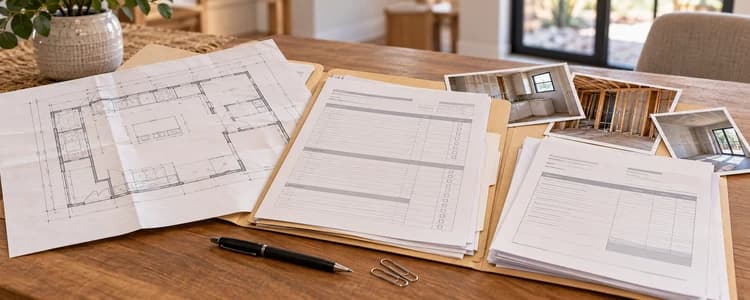
Identify questions each document leaves open. For example, a plan might show an enclosure without confirming whether its inspections were completed. Keep the record and the unanswered question together so the next professional can follow the issue.
If the current layout needs to be documented, our as-built plans guide explains that service. A measured drawing describes conditions; it does not itself establish approval.
Choose a path before promising a repair or credit
The right choice depends on the construction, available records, buyer requirements and time available. Have your agent coordinate transaction decisions while the construction scope is being clarified.
| Possible path | What needs to be established first |
|---|---|
| Resolve the issue before marketing | What approval or closeout is missing, what corrections are necessary, and which milestones control completion. |
| Market with the issue disclosed | Whether the buyer, lender and contract can accommodate the unresolved condition. Disclosure or a negotiated credit does not grant building approval. |
| Revise or remove the affected work | Whether that approach is appropriate and what permits or inspections the corrective work itself requires. |

Before promising a repair or credit
Avoid setting a repair allowance from a photograph alone. Hidden wiring, framing or plumbing can change the required work. Ask what has been verified, what remains concealed and which costs cannot yet be established.
For property within the City of Las Vegas, ask whether its homeowner self-disclosure amnesty program applies. The City's published program concerns penalties; it does not mean ordinary fees disappear or approval is automatic. [1]
If a drawing package is required, our permit drawings page explains the separate drafting scope. If you plan additional improvements before listing, use the remodel permit checker for preliminary guidance about that proposed work.
Keep disclosure, building approval and valuation separate
These are related decisions handled by different people. Disclosure: Nevada's seller disclosure form asks about known construction, alterations or repairs completed without required permits. For covered residential sales, NRS 113.130 generally requires sellers to complete the disclosure form and have it provided to the buyer or buyer's agent at least 10 days before conveyance, subject to statutory exceptions. Discuss your circumstances with your agent or attorney rather than treating a contractor's report as the disclosure itself. [2] [3]
Valuation and financing: Do not assume every unpermitted improvement has zero value, or that obtaining a permit guarantees a higher appraisal. Fannie Mae's guidance directs appraisers to evaluate unpermitted additions and their effect on market value. The actual appraisal and lender requirements remain transaction-specific. [4]
Give each professional the same underlying records. That helps prevent a construction estimate, listing description and buyer explanation from telling different stories about the property.
A Summerlin example: resolving a bedroom conversion before listing
A Stonebridge homeowner contacted Big Horn after an existing loft had been enclosed as a bedroom without permit approval. Our assignment covered the retroactive permit work; we had not performed the original enclosure.
We documented the existing room, prepared the submission and coordinated the required inspections. The City of Las Vegas issued the project's Certificate of Occupancy on August 24, 2026. The Stonebridge loft-to-bedroom permit case study includes the redacted document and explains the approved scope.
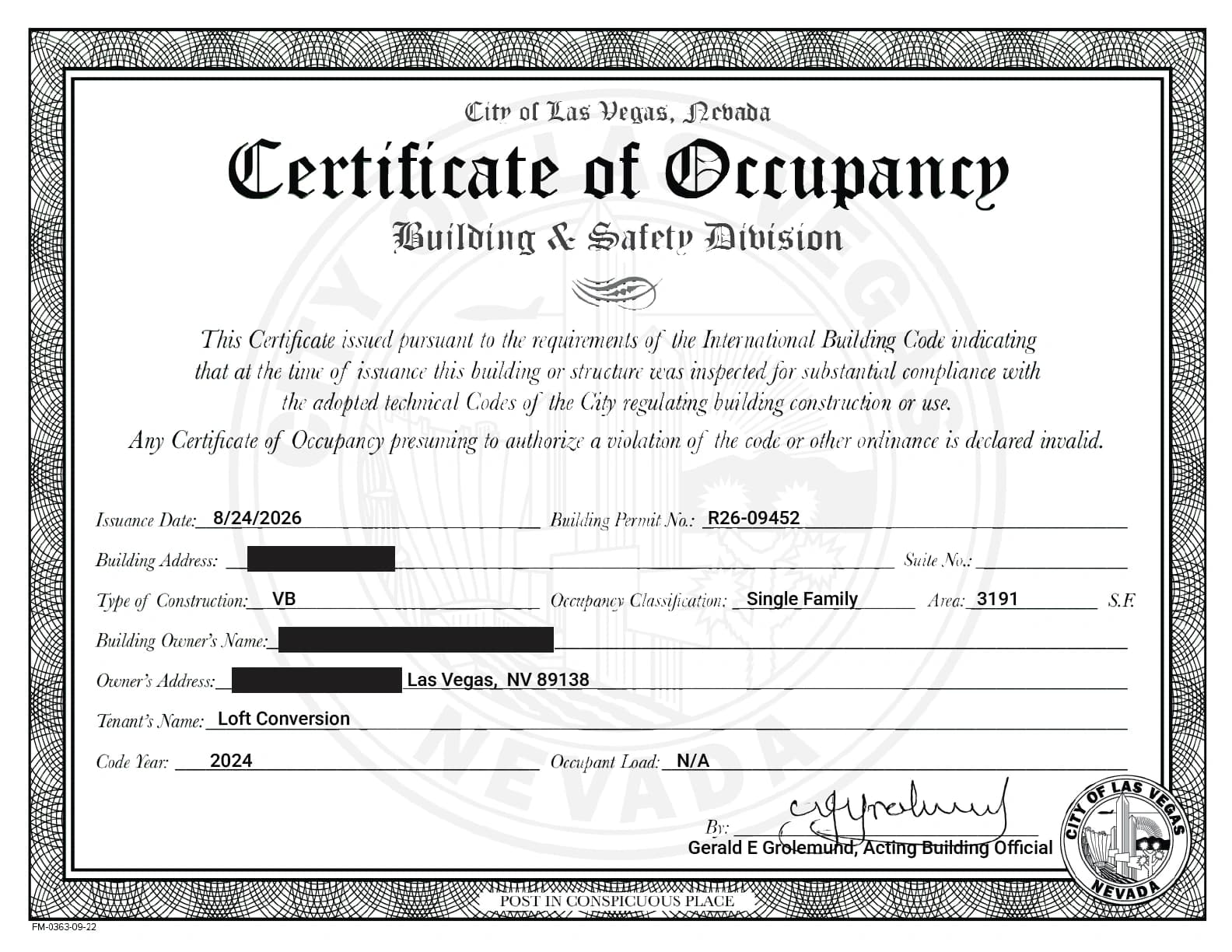
For a seller, the useful lesson is the documentation trail: the room, submitted plans and closeout record could be connected. Another property may require different corrections, engineering or review. This project's outcome does not establish approval or timing for another conversion.
Plan around milestones before committing to dates
A sale deadline is a planning constraint, not an approval schedule. Before promising completion, ask what must happen next and who controls it.
- First, establish the records and physical conditions.
- Then identify any required documentation, construction or inspection work.
- Finally, confirm what evidence the department and transaction participants need to treat the issue as resolved.
Ask the construction team to distinguish its preparation time from government review, inspection availability and revisions. If you are already in escrow, share the actual deadline and relevant inspection request promptly. Your agent should address any extension or contractual response; a contractor cannot guarantee the closing date.
Keep the closeout documents together
When the agreed work is complete, retain the approved scope, applicable final inspection or closeout record, relevant plans and a summary of corrections performed. A certificate of occupancy may be part of a particular project, but it is not the universal closeout document for every permit.
Keep unresolved items identified separately. Ask your agent what the buyer or lender still needs, and whether listing or property-record information needs attention. Do not assume one approval automatically updates every record or covers unrelated alterations elsewhere in the home.
Discuss the construction questions before listing
Big Horn Remodeling is a Nevada B-2 general contractor, license #0091383, serving Las Vegas, Henderson, North Las Vegas and unincorporated Clark County. We can review the available information and help define the documentation or corrective construction involved. Request a pre-listing construction review, or call or text (702) 799-9902. Send the address, photographs, available records and your timing. We will help identify the construction questions to resolve before you make commitments about the property.