Big Horn Remodeling
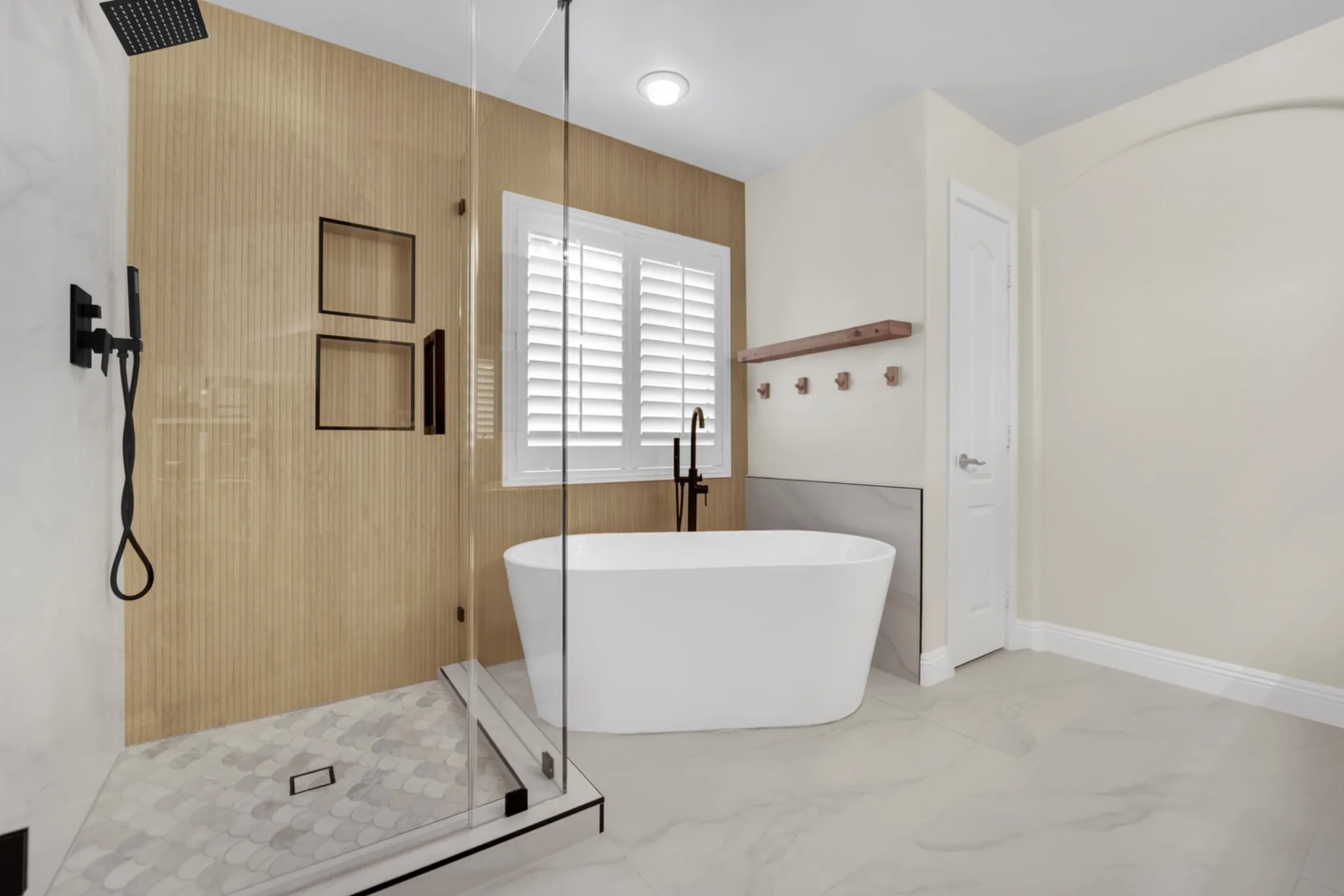
Curbless walk-in shower with floor-to-ceiling fixed glass panel and pebble tile floor

Curbless Walk-In Shower Conversion With Linear Drain

A completed bathroom remodel case study where Big Horn Remodeling converted an older tub and shower combo into a safer curbless walk-in shower with a relocated linear drain, reinforced grab bars, pebble floor tile, a floating bench, custom glass, lighted mirrors, and a brighter vanity area.

Project Type

Curbless Shower

Investment

Approx. $28,000

Timeline

Approx. 20 days

Permits

Plumbing and electrical

Client Goal

Remove the tub step-over and create a safer, brighter curbless walk-in shower for daily use without making the bathroom feel institutional.

Finished Result

A curbless shower with relocated linear drain, reinforced grab bars, pebble floor, floating bench, fixed glass, added lighting, lighted mirrors, and vanity upgrades.

Curbless walk-in shower with floor-to-ceiling fixed glass panel and pebble tile floor
Curbless walk-in shower with floor-to-ceiling fixed glass panel and pebble tile floor.

Photo 1 of 7

Before And After: Curbless Shower Conversion
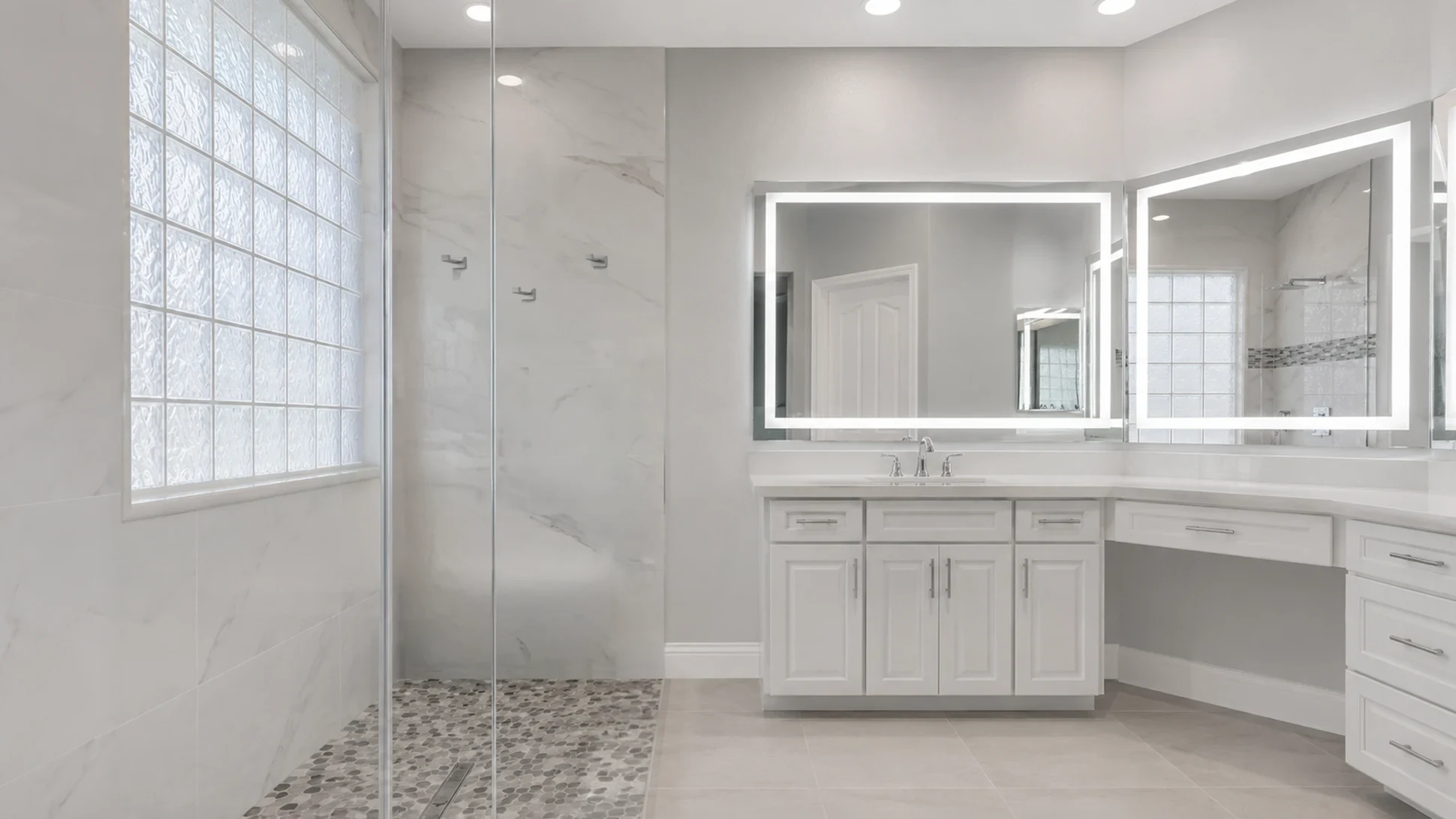
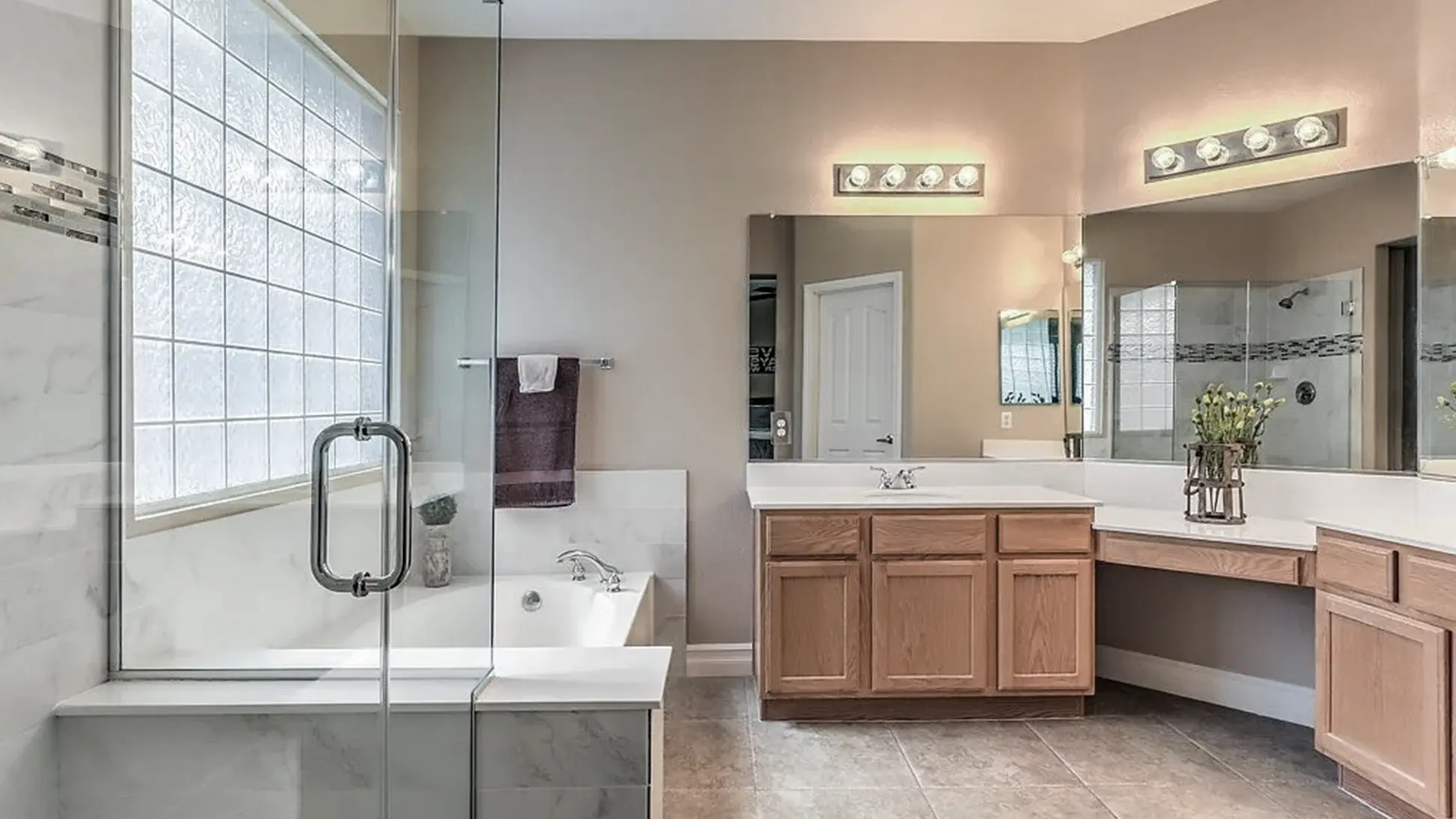
Finished bathroom after the curbless walk-in shower conversion with fixed glass, pebble floor, grab bars, white vanity, and lighted mirrors
Before
After

After

The finished bathroom adds a brighter curbless walk-in shower, relocated linear drain, pebble floor traction, reinforced grab bars, fixed glass, lighted mirrors, and white shaker vanity storage.

Construction Solution

Big Horn Remodeling removed the tub step-over, scanned the post-tension slab, lowered the shower floor, relocated the drain, rebuilt the waterproofed shower pan, reinforced grab-bar locations, and updated the vanity and lighting around a safer daily-use layout.

Completed Curbless Shower Conversion Case Study

Big Horn Remodeling completed this curbless walk-in shower conversion for an elderly couple who wanted to remove an older tub/shower combo and make the bathroom safer, brighter, and easier to use every day.

The project converted the old tub and shower combination into a curbless walk-in shower with a relocated linear drain, reinforced grab bars, pebble floor tile for traction, a floating bench, custom 3/8-inch fixed glass, lighted mirrors, semi-custom shaker vanities, and a brighter vanity area.

This page supports the main Las Vegas bathroom remodel services page by showing one completed project in detail instead of repeating a broad bathroom remodeling service page.

The Client Goal: Remove The Trip Hazard And Make The Shower Easier To Use

The homeowners were an elderly couple who wanted to make their bathroom safer and easier to use every day. The original setup required stepping over the side of the tub to enter the shower. That step-over had become a trip hazard.

Their top priority was a curbless shower entry. They did not want a traditional shower curb, and they did not want a door that would make the space feel tight. The new shower needed to be easier to enter, easier to stand in, and easier to bathe in with a handheld wand, bench, grab bars, and a floor surface with more traction underfoot.
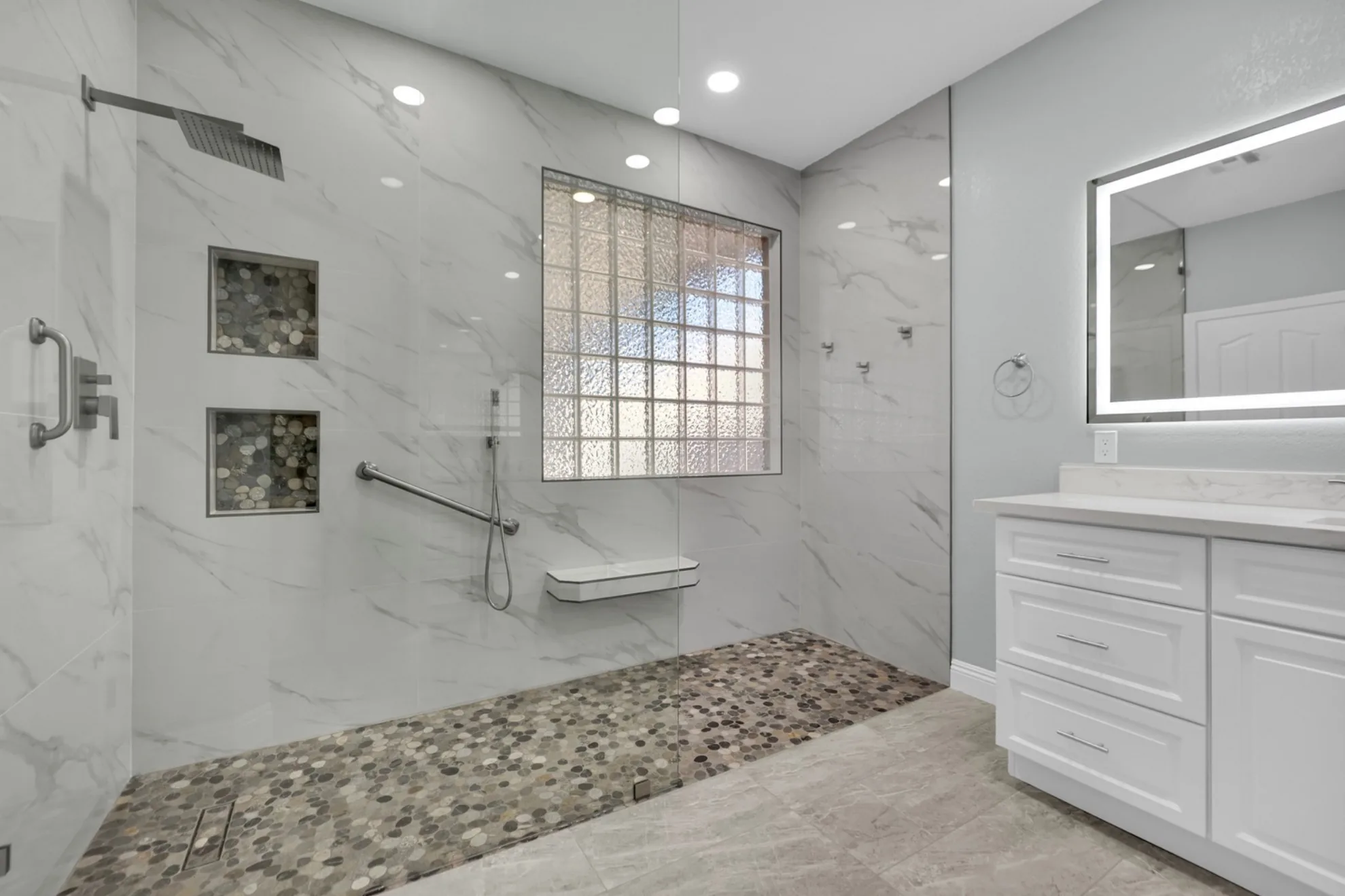
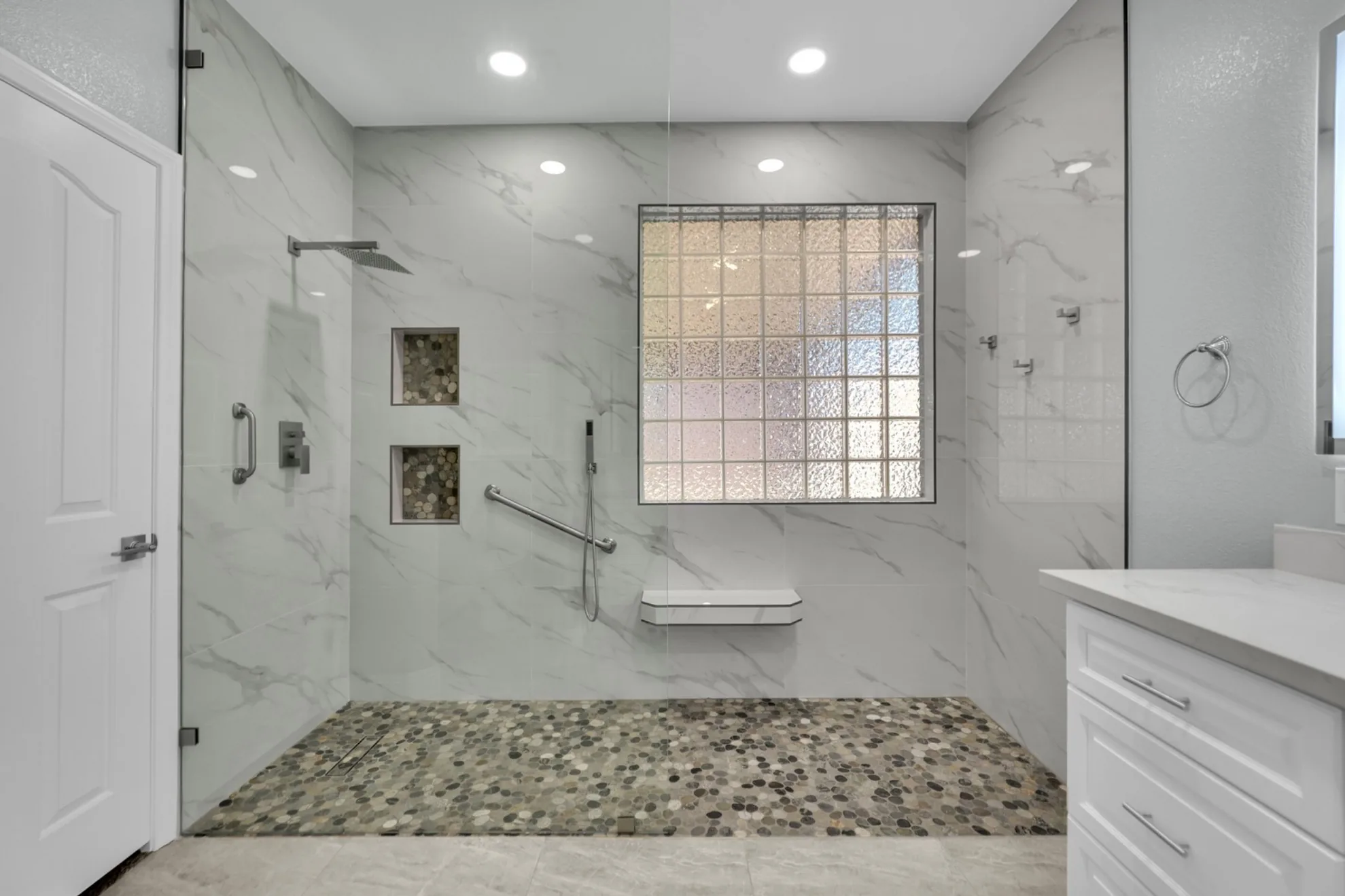
Finished curbless shower with linear drain, glass block window, grab bars, and marble-look porcelain tile
Finished curbless shower with linear drain, glass block window, grab bars, and marble-look porcelain tile.

The Challenge: A True Curbless Shower On A Post-Tension Slab

A curbless shower is not just a design choice. The floor height, drain location, shower pan slope, waterproofing transitions, glass layout, and surrounding bathroom floor all have to work together. In this home, the work was more technical because the bathroom sits on a post-tension concrete slab.

To create the curbless transition, Big Horn Remodeling scanned the slab before concrete work, then demoed the slab down approximately 2.5 inches and built the shower pan back up correctly. That created room for the drainage slope while keeping the shower entry flush with the bathroom floor.
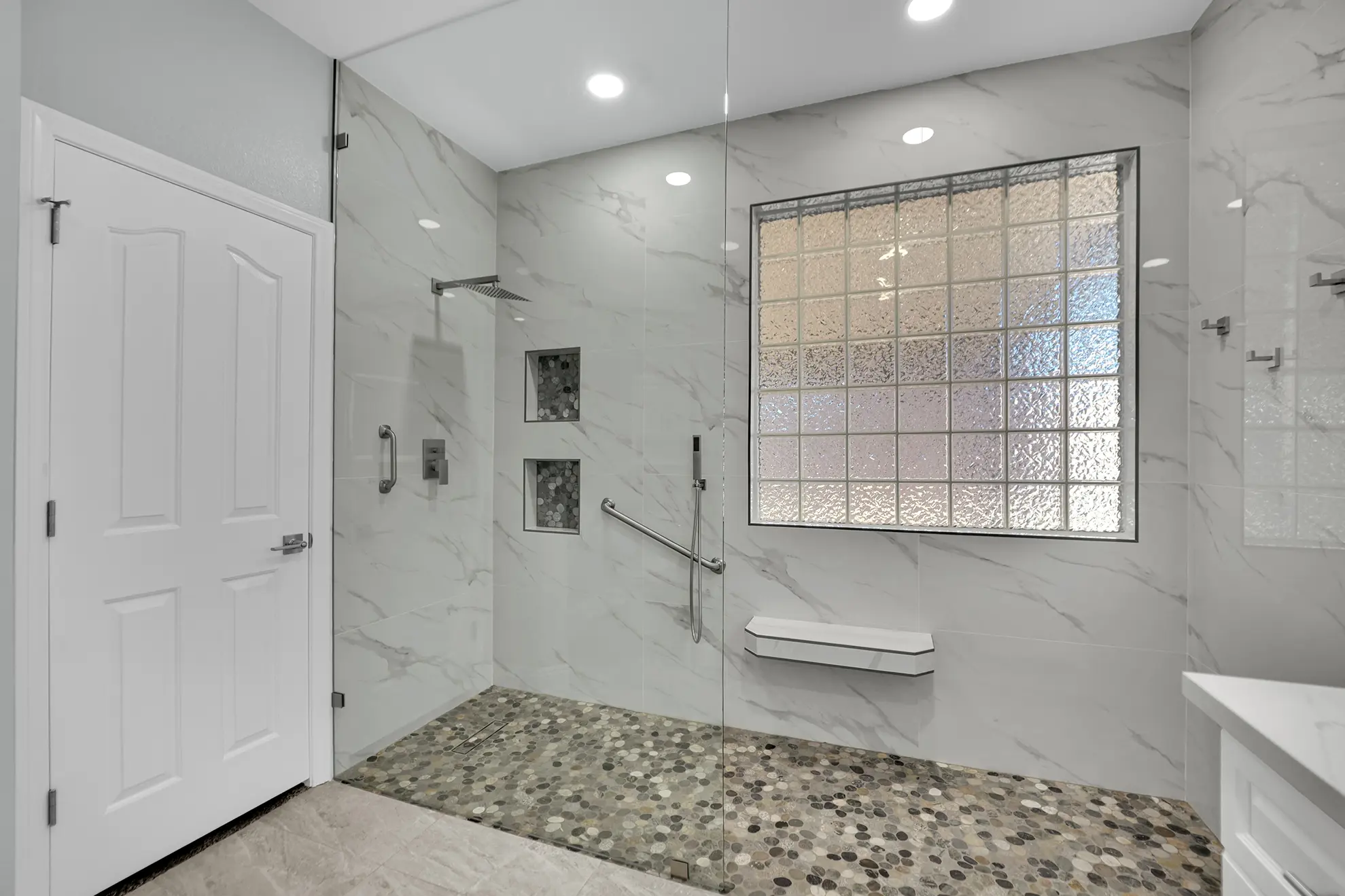
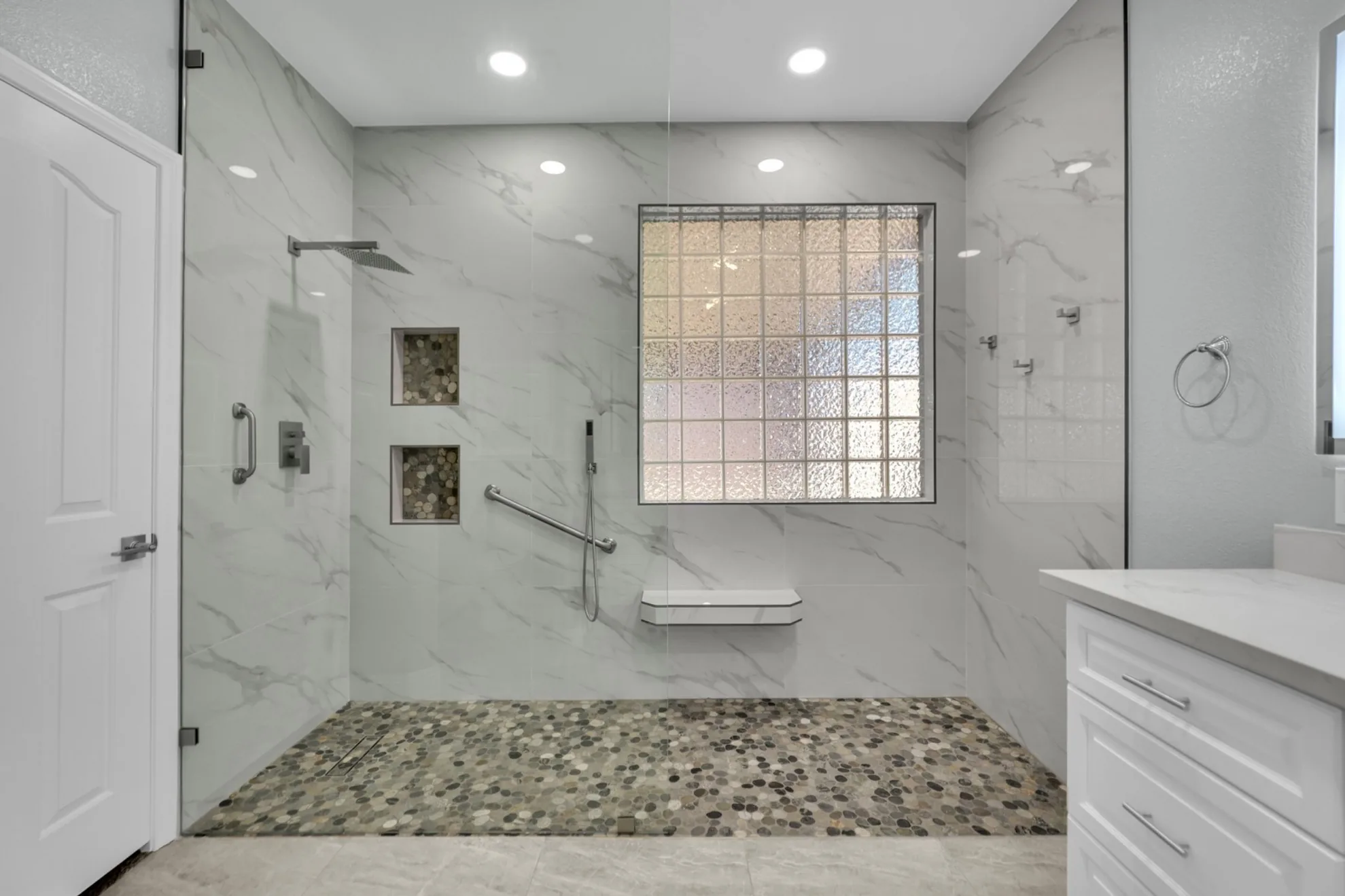
Accessible curbless shower with fixed glass, pebble tile floor, grab bars, glass block window, and floating bench
Accessible curbless shower with fixed glass, pebble tile floor, reinforced grab bars, glass block window, and floating bench.

Why was the slab lowered?

The slab was lowered about 2.5 inches so the shower pan could be rebuilt with proper slope while still creating a curbless entry. Because the home had a post-tension slab, Big Horn Remodeling scanned the concrete before demo work and drain relocation.

The Plan: Safer Entry, Better Drainage, More Traction, And Cleaner Storage

The new shower was designed around daily usability. The curb was eliminated, the tub was removed, and the shower became an open walk-in area with a fixed glass panel. Marble-look porcelain tile kept the shower bright, while pebble floor tile added extra grout lines and traction.

Aging-in-place usability

Curbless entry, no shower door, grab bars, a floating bench, and handheld shower wand made the bathroom easier to use without making it feel institutional.

Clean finish direction

Marble-look porcelain, pebble flooring, fixed glass, lighted mirrors, shaker vanities, and quartz gave the room a bright, custom look.
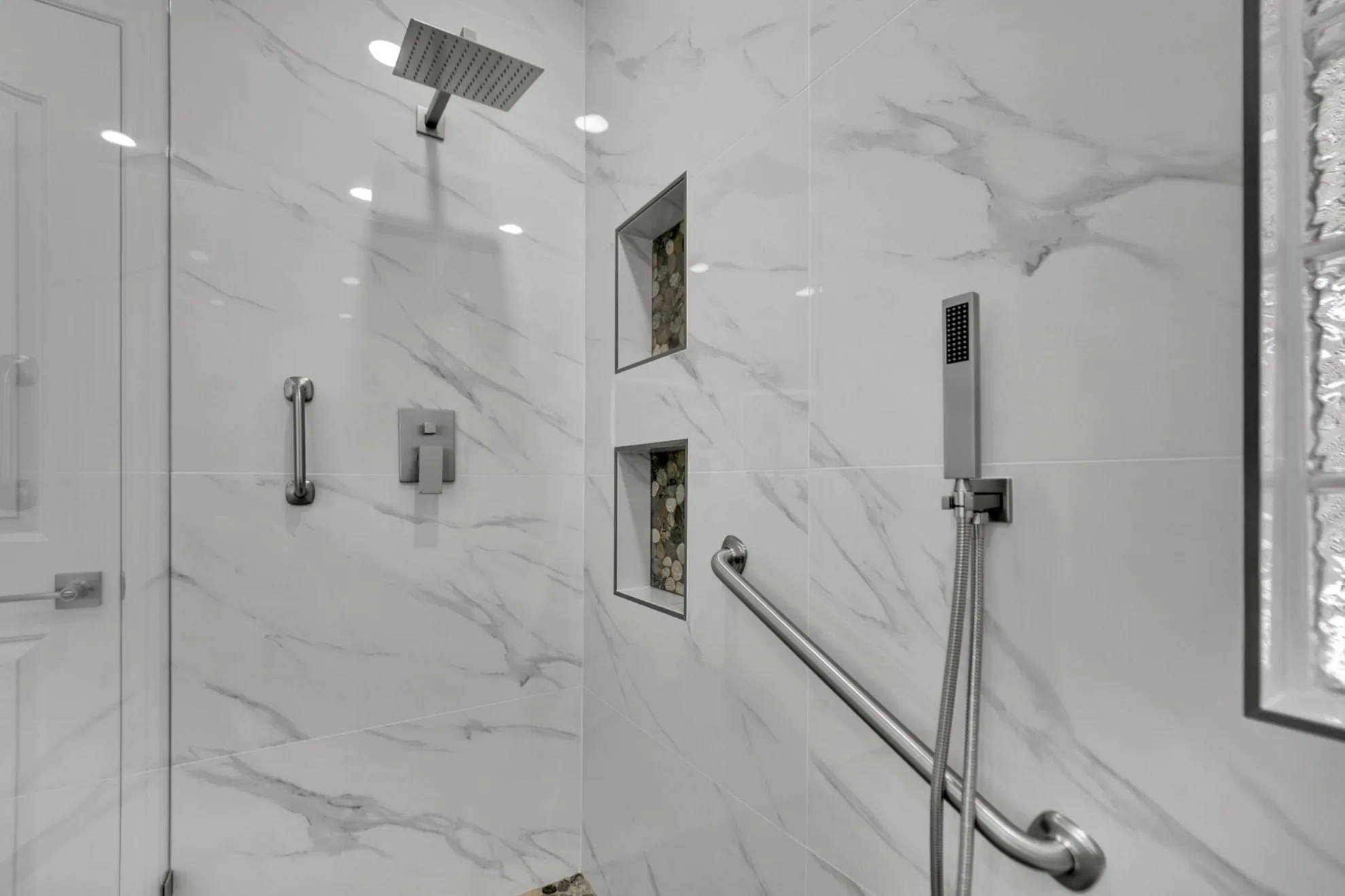
Close-up of curbless shower with built-in niches, handheld shower wand, grab bar, and marble-look porcelain tile
Close-up of niches, handheld shower wand, grab bar, rain head, and marble-look porcelain wall tile.

Technical Scope Of Work

The technical scope included demolition, slab scanning, slab lowering, drain relocation, shower pan construction, waterproofing, tile, glass, lighting, and vanity upgrades. The project required plumbing and electrical permits because the work changed hidden systems, not just finish materials.

Scope area
What was done
Demolition
Removed the existing tub/shower combination and opened the shower area for a curbless layout.
Post-tension slab scanning
Scanned before concrete work because the home sits on a post-tension slab.
Slab lowering
Demoed approximately 2.5 inches of slab depth to create room for a curbless shower pan assembly.
Drain relocation
Relocated the drain and used a linear drain with a hair catcher so it would not sit in an annoying standing location.
Shower pan and waterproofing
Built the shower pan back up with slope and waterproofed using AquaDefense and Kerdi details.
Wall and floor tile
Installed marble-look porcelain walls and pebble floor tile for a bright finish with added traction.
Grab-bar support
Added wood reinforcement behind grab bars before closing the shower walls.
Floating bench
Installed the bench with metal brackets mounted into studs and softened corners for safer use.
Glass
Installed a custom 3/8-inch fixed glass panel from floor to ceiling, secured into framing for a solid feel.
Electrical and vanity
Pulled electrical permit, added recessed can lights, installed lighted mirrors, semi-custom shaker vanities, and prefabricated quartz.

For homeowners comparing similar scopes, the tub-to-shower conversion cost guide explains why custom tile, drain relocation, waterproofing, and slab conditions can change the scope.

Why The Linear Drain Was Moved

The drain location was planned around comfort, not just plumbing convenience. A drain placed in the wrong spot can be something the homeowner steps on every time they shower. On this project, the linear drain was relocated so the standing area felt more comfortable.

The drain also included a hair catcher, which makes routine cleaning easier and helps protect drainage performance over time.

Why Pebble Tile Was Used On The Shower Floor

The homeowners wanted traction. A large-format shower floor can look clean, but it has fewer grout joints. For this project, small pebble tile was chosen because it creates more grout lines underfoot. That texture and grout pattern helped support the accessibility goal of reducing slip risk in a wet shower area.

For more design planning around benches, handheld wands, grab-bar backing, niches, waterproofing, and glass, see the walk-in shower planning guide.

Accessibility And Aging-In-Place Details

  • Curbless entry so the homeowners no longer had to step over a tub or shower curb.
  • No shower door, keeping the entry open and easier to navigate.
  • Pebble shower floor selected for additional grout lines and traction.
  • Grab bars installed with wood reinforcement behind the tile.
  • Floating bench mounted with metal brackets into studs.
  • Bench corners softened to avoid sharp edges in the shower.
  • Handheld shower wand for easier bathing and rinsing.
  • Relocated linear drain to keep the standing area more comfortable.
  • Additional lighting and lighted mirrors to make the bathroom brighter.
  • Towel hooks added for convenient access after showering.

Materials And Finish Selections

The finish package balanced safety, cleaning, storage, and a bright visual direction. The shower used marble-look porcelain walls, pebble tile flooring, AquaDefense and Kerdi waterproofing details, a relocated linear drain, custom fixed glass, a floating bench, reinforced grab bars, and a brighter vanity area.
Element
Selection
Why it mattered
Shower wall tile
Marble-look porcelain tile
Gave the shower a bright, clean, modern look without relying on natural marble.
Shower floor tile
Small pebble tile
Added grout joints and texture for traction underfoot.
Waterproofing
AquaDefense and Kerdi
Protected wet-area transitions, seams, walls, and the shower pan assembly.
Drain
Relocated linear drain with hair catcher
Improved standing comfort and routine maintenance.
Glass
Custom 3/8-inch fixed glass panel
Floor-to-ceiling panel secured into framing for a solid feel.
Bench and grab bars
Floating bench, metal brackets, and reinforced grab-bar blocking
Supported easier bathing and secure support behind the finished tile.
Vanity and countertop
Semi-custom classic shaker vanity with prefabricated quartz
Added storage while keeping the bathroom bright and timeless.
Lighting
Added recessed cans and lighted mirrors
Made the bathroom brighter and more usable every day.
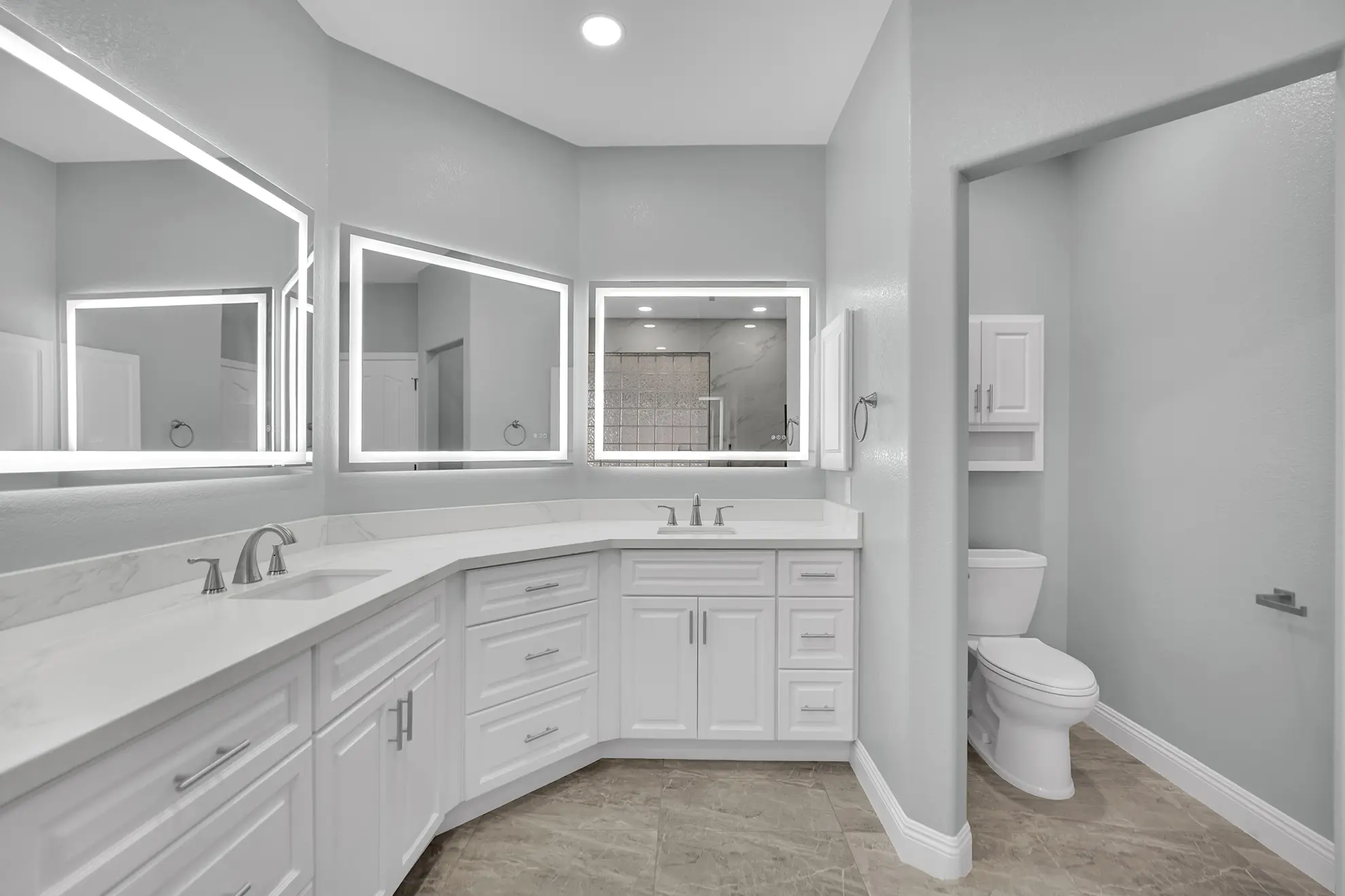
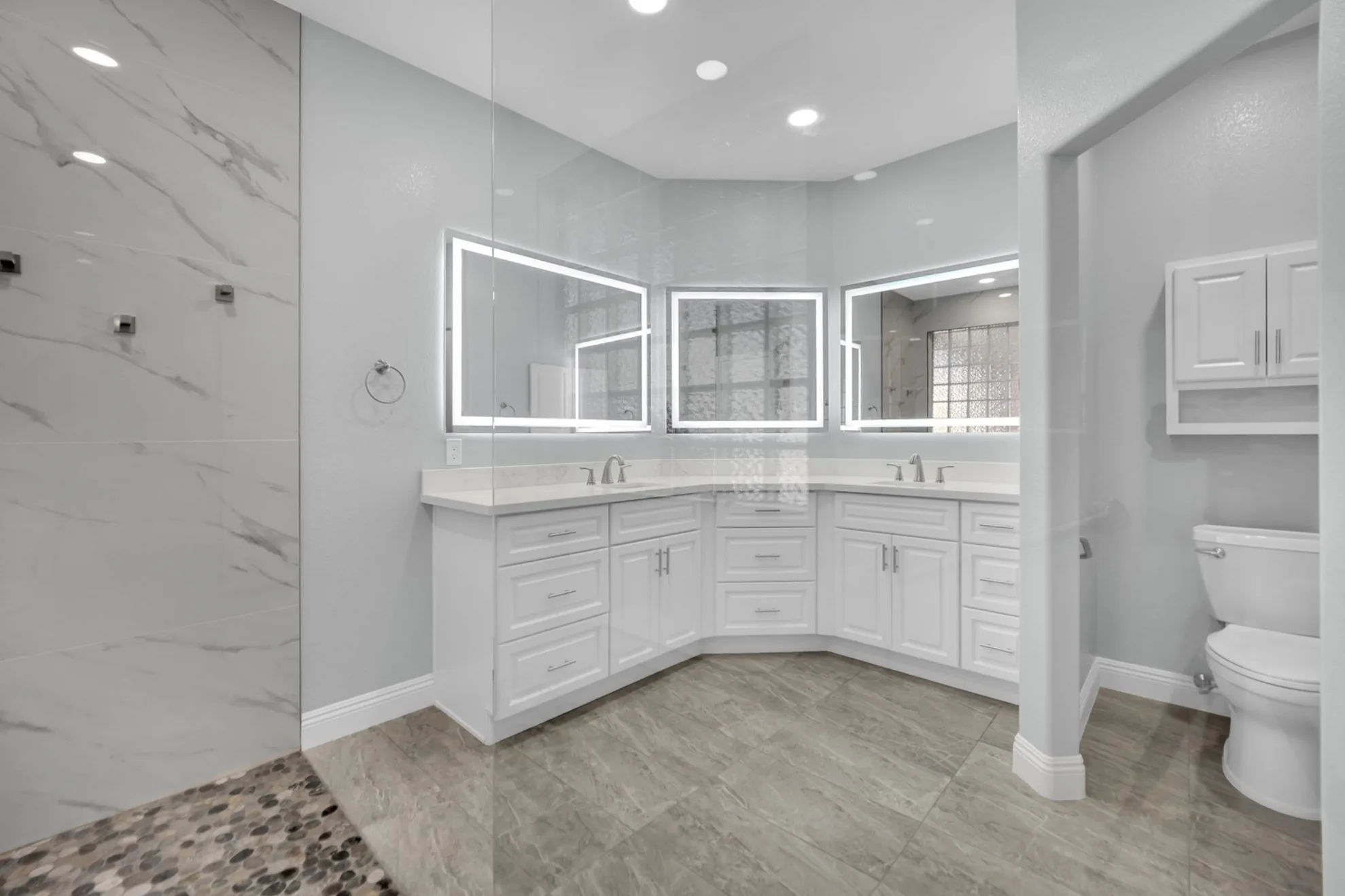
Semi-custom white shaker vanity with prefabricated quartz top and lighted mirrors in a bathroom remodel
Semi-custom shaker cabinets, quartz counter, lighted mirrors, added lighting, and improved storage.
White shaker double vanity with lighted mirrors, quartz countertop, and added bathroom storage
White shaker double vanity with lighted mirrors, quartz countertop, and added bathroom storage.
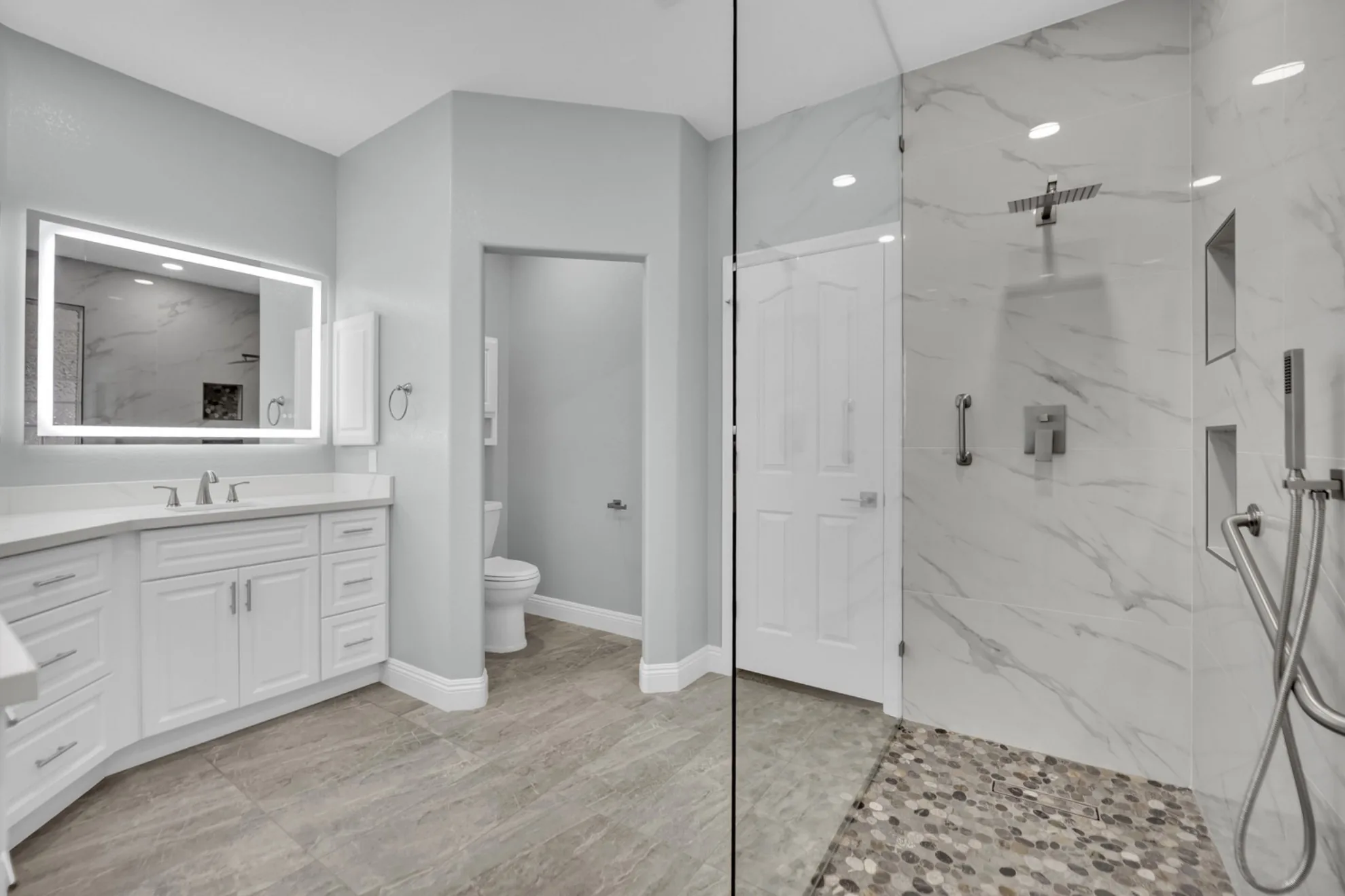
Wide view of the bathroom remodel with white shaker vanity, lighted mirrors, toilet area, quartz countertop, and shower reflected in the mirror
Wide vanity and toilet view with white shaker cabinetry, lighted mirrors, quartz countertop, and the finished curbless shower reflected in the mirror.

Timeline: Approx. 20 Days Of Active Construction

The project took approximately 20 days of active construction. The schedule included demolition, slab scanning, concrete work, plumbing relocation, electrical updates, shower pan work, waterproofing, tile installation, vanity/countertop installation, glass coordination, mirror installation, finish trim, and punch-list completion.

1

Preconstruction

Scope review, finish selections, permit planning, material coordination, and safety/accessibility planning.

2

Demo and verification

Removed the tub/shower combo, opened the work area, scanned the post-tension slab, and confirmed slab/drain conditions.

3

Rough work

Lowered the slab approximately 2.5 inches, relocated the drain, handled plumbing/electrical rough-in, and added recessed can lighting.

4

Shower build

Built the shower pan, waterproofed with AquaDefense and Kerdi details, reinforced grab-bar areas, and prepared bench support.

5

Tile and finishes

Installed porcelain wall tile, pebble floor tile, niches, bench, vanity, quartz top, mirrors, fixtures, and towel hooks.

6

Glass and final punch

Installed the floor-to-ceiling 3/8-inch fixed glass panel, completed final detailing, cleanup, and walkthrough.

For broader planning around bathroom remodel budgets and schedule expectations, use the bathroom remodel cost guide.

Finished Result: Brighter, Safer, More Open, And Easier To Use

The finished bathroom is brighter, safer, more open, and more modern. The homeowners especially loved the bench and the curbless shower. The new layout removed the tub step-over and shower curb, added better lighting, increased storage, and gave the room a cleaner custom look while still focusing on practical day-to-day safety.

The project now gives the homeowners a shower that is easier to enter, easier to use, and easier to maintain. The fixed glass panel keeps the shower open visually, the pebble floor supports traction, the handheld wand improves usability, and the reinforced grab bars provide support where it matters.
Curbless walk-in shower with floor-to-ceiling fixed glass panel and pebble tile floor
Full bathroom view showing the curbless shower, fixed glass panel, vanity area, lighting, and finished layout.

Project Location Map

This project was completed in the Lone Mountain area of Las Vegas. The exact address is withheld for client privacy.

Project completed in the Lone Mountain area of Las Vegas. Exact address withheld for client privacy.

Hidden system work

The scope included post-tension slab scanning, concrete lowering, drain relocation, plumbing coordination, shower pan construction, waterproofing, and permit coordination.

Lighting upgrades

Added recessed can lighting and lighted mirrors made the bathroom brighter and easier to use.

Secure supports

Grab bars were installed over wood backing, and the floating bench was mounted back to studs with metal brackets.

Safety-led finish plan

Curbless entry, pebble floor texture, no door, fixed glass, and a handheld wand all supported day-to-day usability.

Planning a safer curbless walk-in shower?

Big Horn Remodeling can review your existing tub or shower, slab conditions, drain location, waterproofing needs, glass layout, and accessibility goals before demolition starts.
Frequently Asked Questions

What was the main goal of this curbless shower conversion?
The homeowners wanted to remove their tub/shower combo and replace it with a safer curbless walk-in shower. The old tub step-over and shower curb were trip hazards, so the remodel focused on easier entry, better traction, grab bars, a bench, a handheld wand, brighter lighting, and a more modern vanity area.
Why did Big Horn Remodeling scan the slab before lowering the shower floor?
The home had a post-tension concrete slab. Before demoing the slab and relocating the drain, Big Horn Remodeling scanned the area to reduce the risk of hitting post-tension cables. That step was important because the shower pan needed to be lowered about 2.5 inches to create a true curbless transition.
Why was the shower floor lowered about 2.5 inches?
The slab was lowered about 2.5 inches so the shower pan could be rebuilt with proper slope while still creating a curbless entry. Because the home had a post-tension slab, Big Horn Remodeling scanned the concrete before demo work and drain relocation.
Why was the drain relocated instead of reused in the same spot?
The drain was relocated so the homeowners would not have to stand directly on it during normal shower use. Big Horn installed a linear drain with a hair catcher, which helped the shower feel more comfortable underfoot and made routine cleaning easier.
Why did the homeowners choose pebble tile for the shower floor?
They wanted more traction. Pebble tile creates many grout joints, which can help the floor feel less slick than a smoother large-format tile. In this project, the pebble floor supported the accessibility goal of reducing slip risk in the wet shower area.
How were the grab bars made secure?
Big Horn Remodeling reinforced the wall behind the grab bars with wood blocking before closing the shower walls and installing tile. That allowed the grab bars to be anchored into solid backing instead of depending on tile alone.
What made the shower glass feel more solid?
The shower uses a custom 3/8-inch fabricated fixed glass panel. The panel was run from floor to ceiling and secured with a bracket into a stud so the glass would feel solid instead of wobbly.
What waterproofing was used in this shower?
Big Horn Remodeling used AquaDefense and Kerdi details as part of the waterproofing approach for the shower assembly. The goal was to protect the pan, walls, seams, and transitions before the finished tile was installed.
How long did this curbless shower conversion take?
The active construction timeline was approximately 20 days. The work included demolition, slab scanning, slab lowering, drain relocation, plumbing and electrical, waterproofing, tile, vanity and quartz installation, custom glass, lighted mirrors, fixtures, and final punch-list work.
Custom maple kitchen remodel with stained maple cabinets, Taj Mahal countertops, and large island seating
Kitchen

Custom Maple Kitchen Remodel With 16-Foot Taj Mahal Island

BudgetApprox. $75KTimelineApprox. 1 month
Prefab kitchen remodel with white raised-panel cabinets, leathered quartz countertops, enlarged single-level island, and stainless appliances
Kitchen

Prefab Kitchen Remodel With White Raised-Panel Cabinets

BudgetApprox. $26KTimelineApprox. 8 active days
Full custom kitchen remodel in Centennial Hills Las Vegas with two new islands and Calacatta White Quartz countertops
Kitchen

Full Custom Kitchen Remodel in Centennial Hills, Las Vegas

Centennial Hills
BudgetApprox. $50KTimelineApprox. 4 weeks

Contact Us

TODAY!

Nathan Nehoraoff - Owner of Big Horn Remodeling, Nevada B-2 License #0091383

About the author

Nathan Nehoraoff is the owner of Big Horn Remodeling, a licensed Nevada B-2 General Building contractor based in Las Vegas. Big Horn handles bathroom remodels, curbless showers, tub-to-shower conversions, waterproofing, permits, and accessibility-focused remodel scopes across the greater Las Vegas valley. Nevada license #0091383 is used consistently across Big Horn's author, footer, homepage, and service-page references.

Planning a safer curbless walk-in shower? Ask Nathan to review your existing tub or shower, slab conditions, drain location, waterproofing needs, glass layout, and accessibility goals before demolition starts.