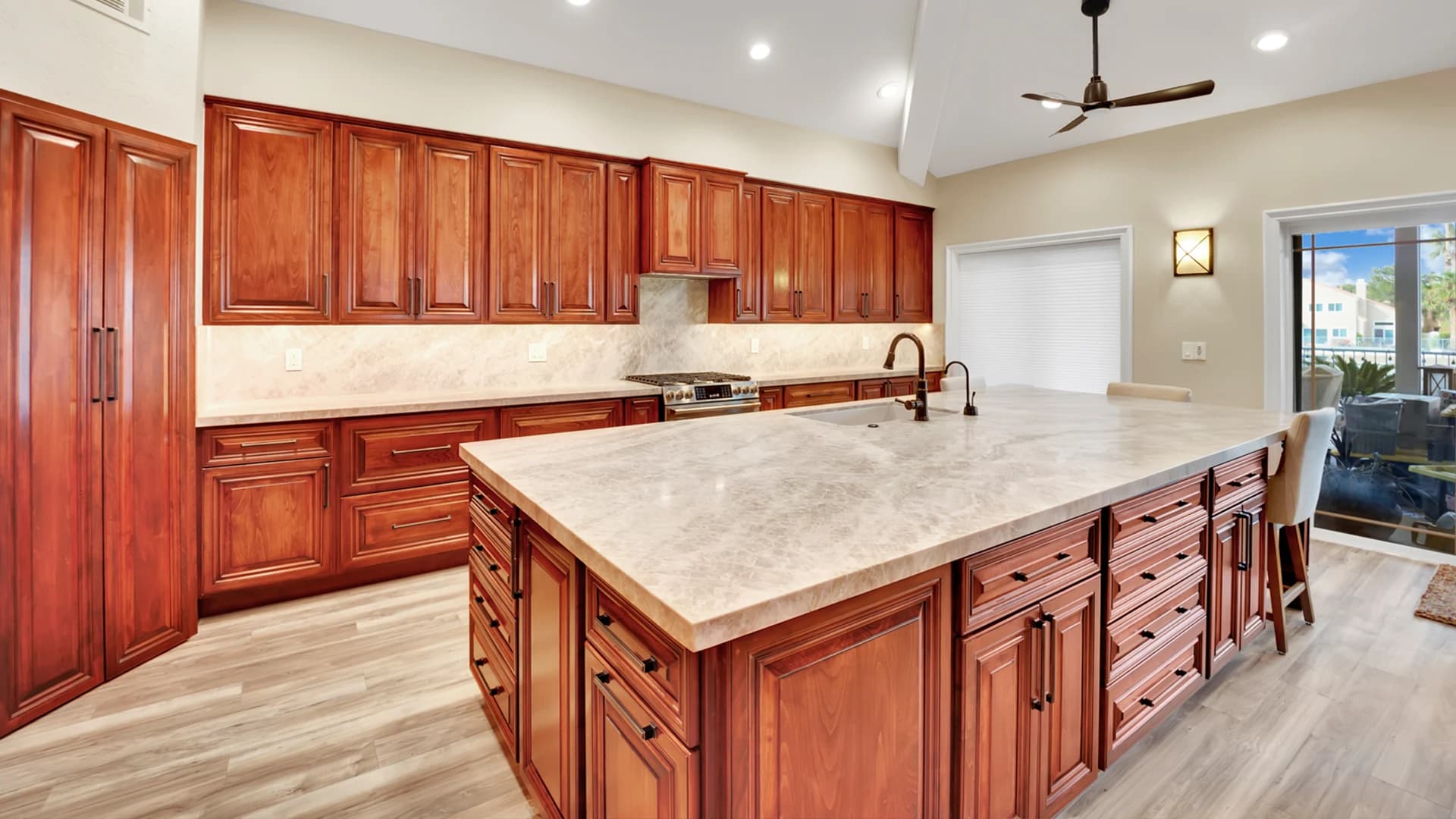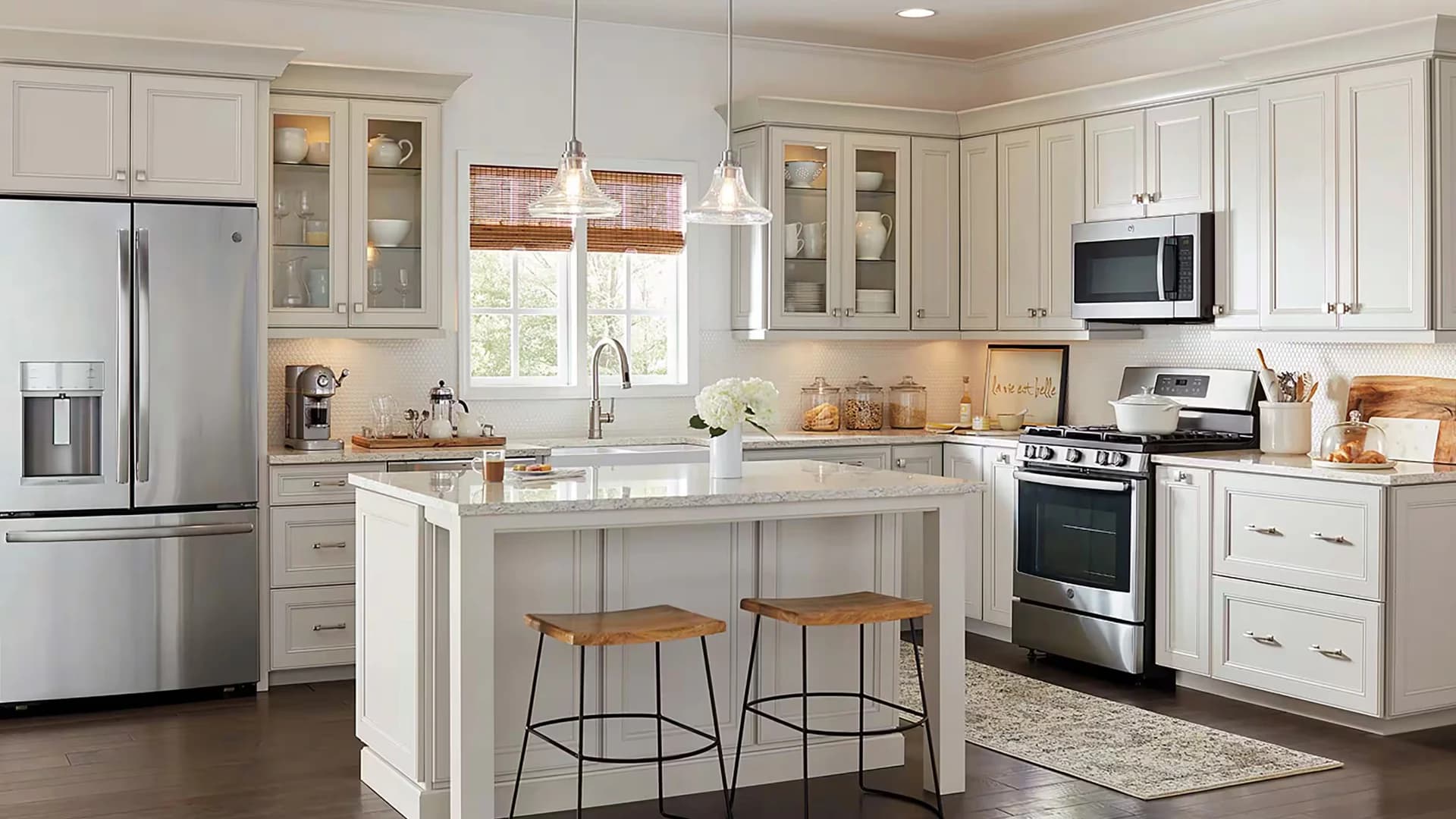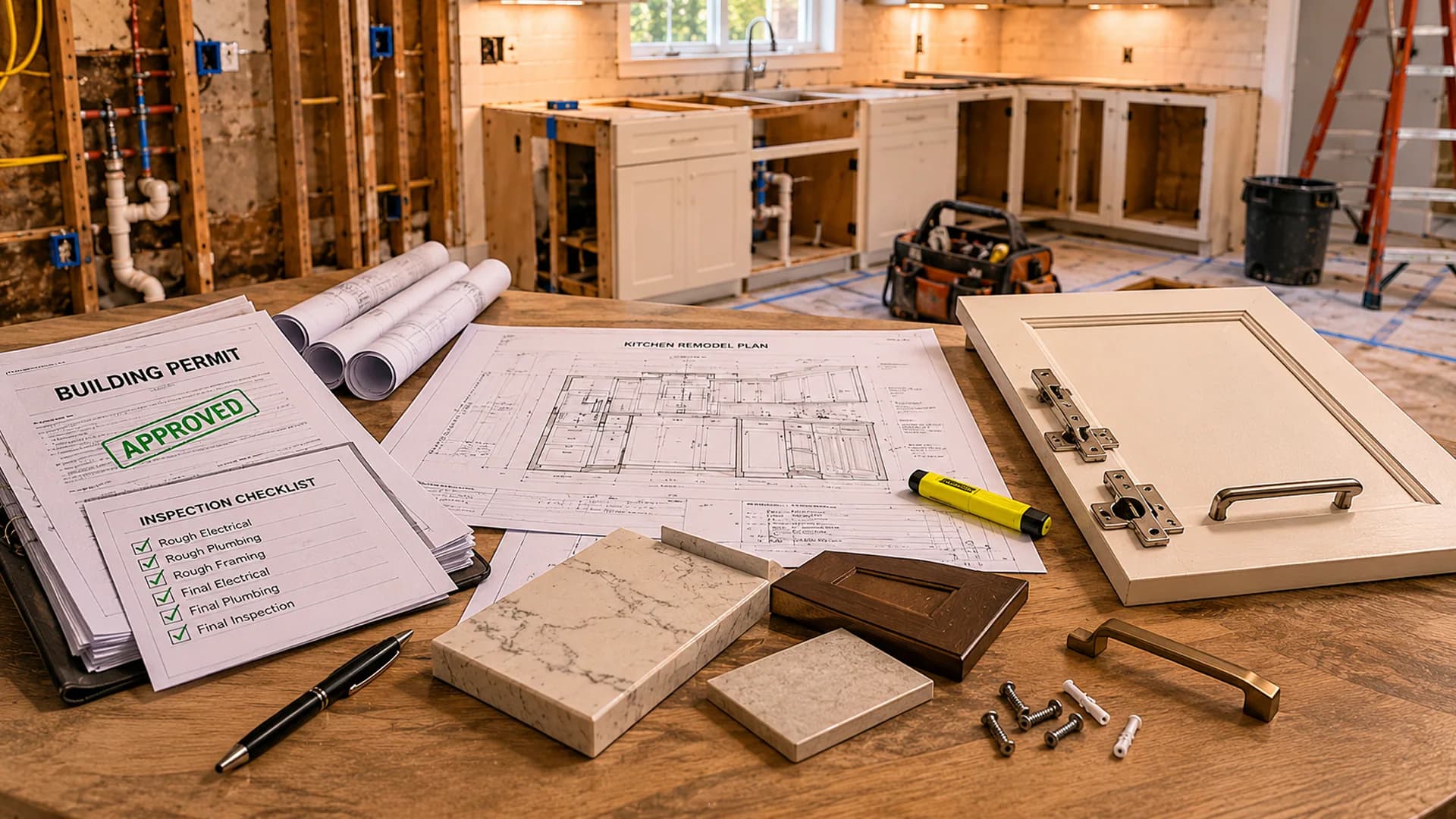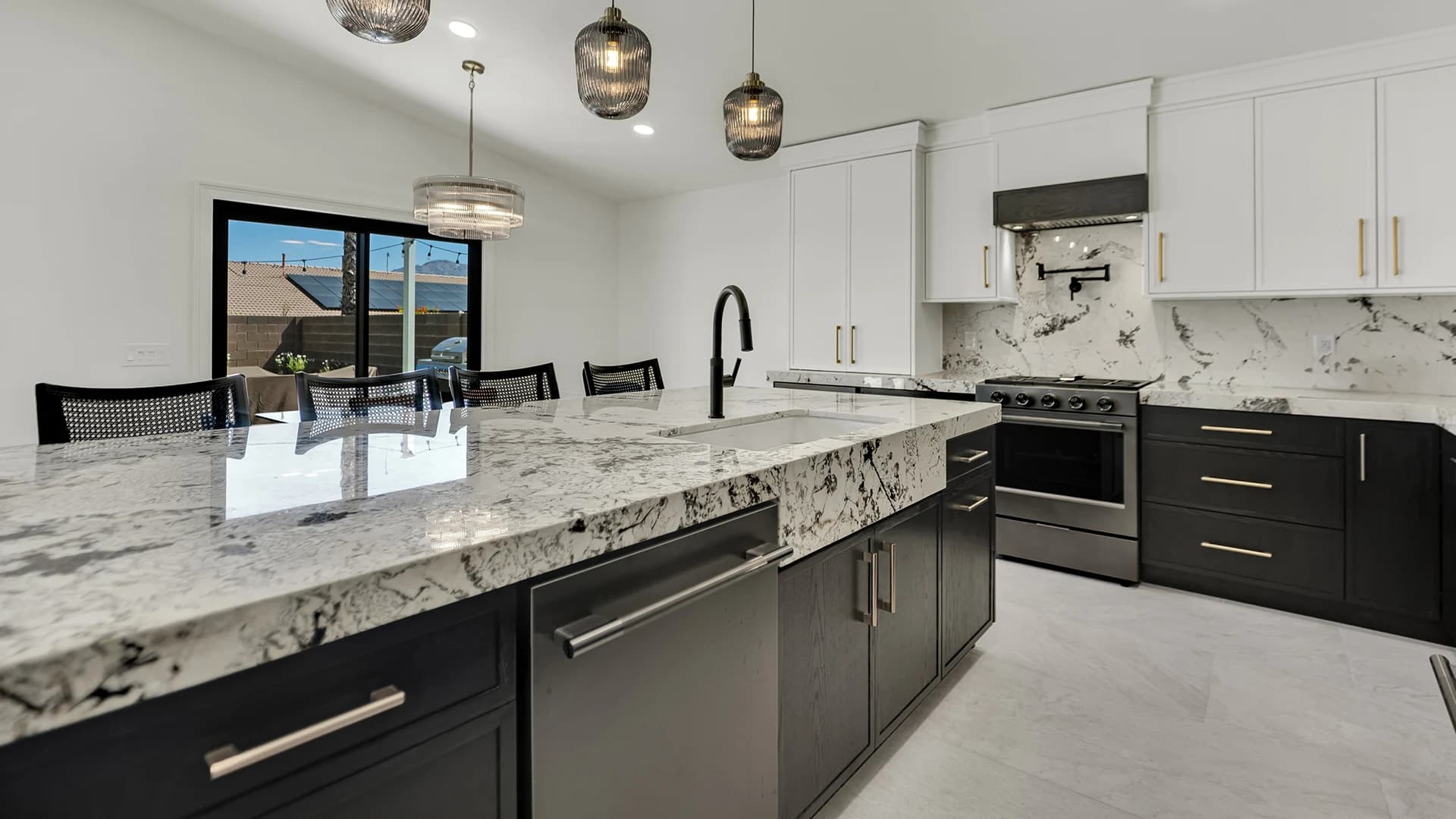

Short answer: A luxury kitchen remodel in Las Vegas is a custom-planned kitchen where layout, storage, appliances, lighting, ventilation, materials, and installation details work together before demolition starts. Premium finishes matter, but the project only feels high-end when cabinet dimensions, appliance specs, island power, slab transitions, hidden systems, and finish selections are coordinated into a build-ready scope.
A luxury kitchen remodel in Las Vegas should do more than look expensive in photos. The best high-end kitchens are planned around how the home is actually used: cooking, storage, entertaining, appliance placement, lighting, ventilation, cleanup, and long-term durability. Premium finishes matter, but they only perform well when the layout, cabinet plan, rough trades, and installation sequence are handled correctly.
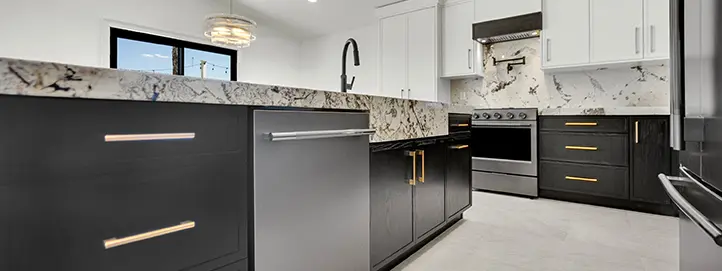
That is why a luxury kitchen remodel should start with field verification and scope planning before demolition. Cabinet dimensions, appliance specifications, hood requirements, island power, plumbing locations, wall conditions, slab transitions, and finish selections all affect the final result. When these decisions are rushed, a luxury project can still end up with awkward clearances, weak lighting, noisy ventilation, underused storage, or expensive change orders.
This guide explains what makes a kitchen remodel luxury, which features are worth planning early, and how Las Vegas homeowners can approach a premium kitchen remodel without losing control of scope, schedule, or finish quality.
When you are ready to turn these design decisions into a buildable project, review our Las Vegas kitchen remodeling services for field verification, custom scope planning, trade coordination, permits, and construction.
Luxury Kitchen Remodel vs Full Kitchen Remodel vs Semi-Custom Kitchen Remodel
A luxury kitchen remodel is not just a full kitchen remodel with more expensive finishes. A full kitchen remodel usually means the kitchen is rebuilt with new cabinets, countertops, fixtures, appliances, and finish work. A semi-custom kitchen remodel may still be high quality, but it usually works within a more standardized cabinet system and fewer build-specific details.
Use a luxury planning process when the remodel includes panel-ready appliances, a larger island, custom or highly specified cabinetry, full-height slab backsplash, layered lighting, high-output ventilation, custom storage, and tighter finish tolerances.
What Makes a Kitchen Remodel Luxury?
A luxury kitchen remodel is not defined by one material or one appliance brand. It is the combination of custom planning, premium materials, better function, precise installation, and a finished space that feels intentional from every angle.
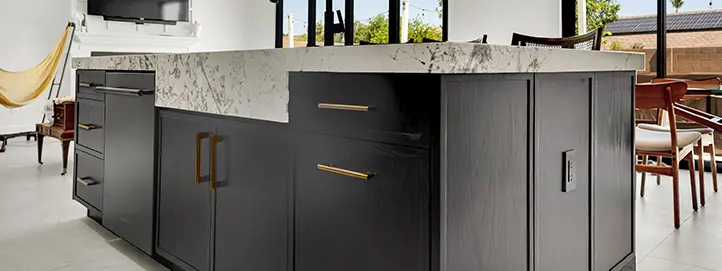
In practical construction terms, luxury usually means the kitchen is designed around the homeowner instead of being forced into the old layout. Storage is planned by zone. Appliances are selected before cabinets are finalized. Lighting is layered instead of relying on one ceiling fixture. Countertop and backsplash choices are coordinated with cabinet finishes, flooring, hardware, and wall color. The island is sized for traffic flow, not just for photos.
- Better workflow between the sink, range, refrigerator, prep area, and cleanup zones.
- Custom or highly specified cabinetry with storage accessories that solve real problems.
- Premium countertop and backsplash materials installed with clean seams and edge details.
- Appliance planning that accounts for dimensions, panels, ventilation, electrical load, gas, water, and delivery timing.
- Layered lighting, including recessed lighting, pendants, under-cabinet lighting, accent lighting, and dimming where appropriate.
- Construction planning that reduces surprises before cabinets, countertops, and finished surfaces are installed.
The goal is not just to spend more. The goal is to make the money visible in the right places and invisible where it should be: inside clean alignments, smooth drawer operation, correct clearances, strong lighting, and details that hold up under daily use.
Luxury Kitchen Features Worth Planning Before Demo
Many luxury features must be decided before demolition because they affect the rough work behind the walls, the cabinet order, or the countertop template. Waiting too long can create delays or force compromises.
- Oversized island with seating, storage, electrical, microwave drawer, prep sink, or waterfall edge.
- Panel-ready refrigerator, dishwasher, or freezer columns that must align with cabinet panels and clearances.
- Professional-style range, induction cooktop, double oven, steam oven, warming drawer, or built-in coffee station.
- Full-height slab backsplash or bookmatched stone that requires early material selection and layout planning.
- Hidden pantry wall, appliance garage, mixer lift, tray dividers, spice pullouts, trash pullouts, and drawer organizers.
- Under-cabinet lighting, toe-kick lighting, illuminated glass cabinets, or accent lighting that requires wiring before finish surfaces are closed.
- Larger ventilation hood or modified duct path for high-output cooking equipment.
Lock these before demo
- Appliance model numbers.
- Cabinet elevations.
- Island utility plan.
- Hood and duct path.
- Lighting zones.
- Slab selection.
- Outlet plan.
- Sink and faucet specs.
- Panel-ready appliance clearances.
- HOA and permit path.
A premium kitchen should feel effortless after it is complete. That usually requires more decisions up front, not fewer. The earlier the cabinet layout, appliance specs, finish selections, and technical requirements are confirmed, the smoother the project can move once the home becomes an active jobsite.
Custom Cabinets, Hidden Storage, and Appliance Integration
Cabinetry is where a luxury kitchen becomes personal. Standard cabinets can improve a kitchen, but a high-end remodel should think beyond door style and color. The question is how the cabinetry supports the way you cook, store, clean, and entertain.
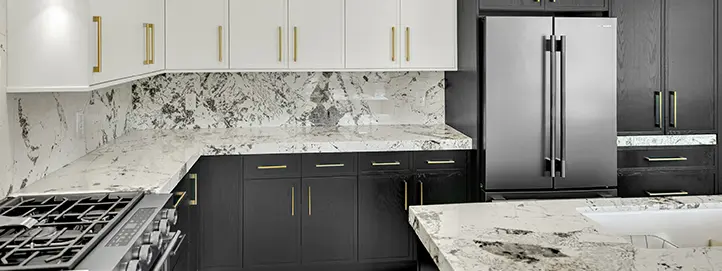
Some homes need fully custom cabinets because the kitchen has unusual dimensions, a built-in appliance wall, a hidden pantry, ceiling-height storage, or a specific design vision. Other homes can achieve a luxury result with a high-quality semi-custom cabinet package, upgraded interiors, premium hardware, and careful layout planning. The right choice depends on the house, the design goals, and the level of customization needed.
- Use deep drawers near the range for pots and pans instead of relying only on lower cabinet doors.
- Plan vertical tray storage for cutting boards, baking sheets, and serving pieces.
- Add pull-out trash and recycling near the cleanup zone, not across the kitchen.
- Use appliance garages for small appliances that otherwise clutter the countertops.
- Coordinate panel-ready appliances early so refrigerator, freezer, and dishwasher fronts align with the cabinet design.
- Confirm fillers, end panels, crown, toe kicks, reveals, and ceiling transitions before ordering cabinets.
Luxury cabinet package checklist
- Filler strategy so gaps look intentional instead of patched in.
- Finished end panels where cabinet sides remain visible.
- Panel-ready appliance fronts coordinated with the appliance specs.
- Interior accessories such as rollouts, tray dividers, spice storage, trash pullouts, and appliance garages.
- Drawer hardware and glide quality appropriate for heavy daily use.
- Ceiling, crown, soffit, and stacked-cabinet transitions resolved before ordering.
- Reveal strategy around tall cabinets, appliance panels, and walls that are not perfectly plumb.
- Maintenance notes for painted doors, stained wood, slab fronts, inset profiles, and natural wood finishes.
A luxury cabinet package should also account for finish durability. Painted doors, stained wood, slab doors, inset profiles, and natural wood finishes all have different maintenance expectations. The best option is the one that fits the design and performs well in the home.
Luxury Kitchen Islands: Seating, Prep Space, Storage, and Power
A kitchen island is often the centerpiece of a luxury remodel, but the island has to earn its size. A large island that blocks traffic or creates awkward appliance clearances can make the kitchen worse, even if the materials are expensive.
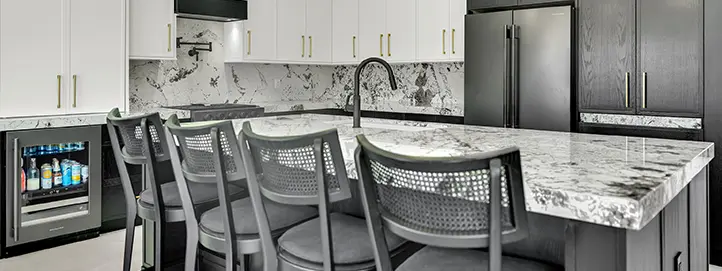
Before committing to an island design, review the walkways, seating overhang, drawer swing, appliance doors, refrigerator access, sink location, range location, and how people will move through the room during cooking and entertaining.
- Prep island: prioritizes open counter space, trash pullout, knives, cutting boards, and prep sink where useful.
- Seating island: requires comfortable overhang, knee space, outlet planning, and traffic clearance behind stools.
- Storage island: adds drawers, deep cabinets, tray storage, rollouts, or display shelving.
- Waterfall island: creates a premium visual detail but requires careful slab selection, edge planning, and fabrication coordination.
- Appliance island: may include a microwave drawer, beverage refrigerator, dishwasher, sink, or cooktop, each with its own utility and clearance requirements.
Island constraints to check before committing
- Keep clear walkways around the island; 36 inches is a common minimum baseline, and busy work aisles often need closer to 42-48 inches.
- Plan stool spacing before the slab is ordered; each seat needs usable width and enough overhang for knees.
- Open refrigerator, dishwasher, oven, and microwave drawer doors on the plan to catch conflicts before cabinets are ordered.
- Confirm whether the island needs outlets, a microwave drawer, beverage refrigerator, prep sink, dishwasher, lighting, or other utilities.
- Coordinate waterfall slabs early so veining, edge buildup, seam placement, and panel thickness work with the cabinet box.
- Treat the island as too large if it forces narrow walkways, blocks appliance doors, interrupts the sink-range-refrigerator workflow, or makes seating uncomfortable.
Island power is also a technical issue. If the island includes outlets, appliances, lighting, or a sink, those decisions should be reviewed before demolition so electrical and plumbing routes can be planned correctly.
Countertops, Slab Backsplashes, and Finish Materials
Luxury kitchens often use quartz, quartzite, porcelain slab, natural stone, or premium granite. The right material depends on the design, maintenance expectations, edge detail, slab size, seam layout, and how heavily the kitchen will be used.
Quartz is popular because it is predictable, durable, and available in many styles. Quartzite and natural stone can create a more unique luxury look, but they require more attention to slab selection, sealing, fabrication, and long-term care. Porcelain slab can work well for dramatic full-height backsplashes, but installation quality matters.
- Choose slabs in person when possible, especially for natural stone with movement or veining.
- Review seam locations before fabrication so the layout does not interrupt a focal point.
- Coordinate countertop thickness, edge profile, backsplash height, range wall details, and waterfall panels together.
- Use durable surfaces around high-use zones such as the sink, range, coffee station, and island seating area.
- Match the finish level of hardware, faucet, sink, lighting, and cabinet details so the kitchen feels complete.
For a luxury kitchen, finish materials should not be chosen one at a time. They should be selected as a system so the cabinet color, flooring, countertop, backsplash, plumbing fixtures, lighting temperature, and hardware all support the same design direction.
Lighting, Ventilation, and Electrical Planning
Lighting is one of the biggest differences between a standard kitchen update and a high-end kitchen remodel. A luxury kitchen should not rely on a single light source. It needs layered lighting that supports cooking, cleaning, entertaining, and nighttime use.
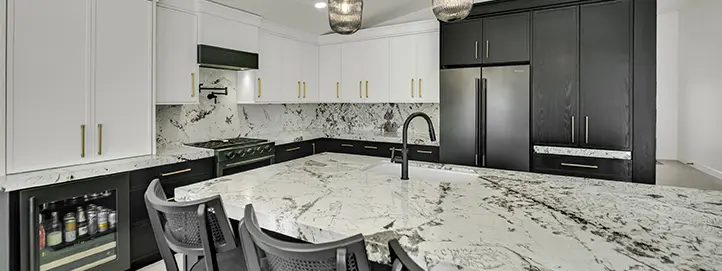
- Recessed lights for general room lighting.
- Pendant or linear fixtures over the island for visual focus and task support.
- Under-cabinet lighting for prep surfaces.
- Interior cabinet lighting for glass doors or display areas.
- Accent lighting for toe kicks, floating shelves, or architectural features when appropriate.
- Dimmers and switching zones so the kitchen can shift from bright work lighting to evening ambience.
Lighting plan by layer
- General lighting for safe movement through the kitchen.
- Task lighting at prep zones, cleanup zones, cooktop/range areas, and coffee or beverage stations.
- Island lighting sized to the island, ceiling height, and sightlines from nearby rooms.
- Under-cabinet lighting coordinated with backsplash material, outlet placement, and cabinet trim.
- Accent lighting for glass cabinets, floating shelves, toe kicks, or architectural details when it supports the design.
- Switching and dimming zones that separate cooking, entertaining, cleaning, and nighttime use.
Ventilation should be planned with the appliance package. A powerful range or cooktop may require a better hood, duct review, makeup air considerations, or modifications to the existing ventilation path. This is especially important in open-concept kitchens where cooking odors, heat, and noise can affect nearby living spaces.
Ventilation mistakes in high-output kitchens
- Choosing the range first and checking the hood or duct path later.
- Assuming the old duct route can support a larger or more powerful appliance package.
- Selecting a hood for appearance only, without reviewing capture area, duct size, noise, and clearances.
- Forgetting that open-concept kitchens make odor, heat, and fan noise more noticeable.
- Finalizing cabinets before confirming hood dimensions, cabinet clearances, and wall or ceiling constraints.
Electrical planning should also account for island outlets, appliance circuits, under-cabinet lighting, dedicated circuits, panel capacity, low-voltage needs, and future smart-home features. When the remodel changes hidden systems, permit review should happen before work starts.
Luxury Appliances and the Details That Affect Construction
Appliances are not just selections at the end of the project. In a luxury kitchen, the appliance package affects cabinet dimensions, clearances, electrical loads, gas lines, water lines, ventilation, countertop cuts, delivery timing, and inspection planning.
Before cabinets are ordered, confirm the exact model numbers and installation specifications for the refrigerator, freezer, range, cooktop, ovens, microwave drawer, dishwasher, beverage refrigerator, ice maker, coffee system, and hood. A small change in appliance model can change the cabinet opening, panel design, outlet location, gas connection, water supply, or ventilation requirement.
- Panel-ready appliances need cabinet coordination so finished panels align and operate correctly.
- Built-in refrigerators and freezer columns require precise dimensions and clearances.
- High-output ranges and rangetops need proper ventilation planning.
- Microwave drawers, warming drawers, and steam ovens affect cabinet heights and electrical requirements.
- Beverage stations, ice makers, and coffee systems may require water, drainage, electrical, and cabinet planning.
A luxury appliance package can be a major investment, but the real risk is not just purchase price. The risk is ordering cabinets or starting rough work before the specifications are locked.
Luxury Remodel Mistakes That Create Change Orders
Luxury kitchen remodels can become expensive quickly when the planning is incomplete. The most common problems are not always dramatic construction failures. Many are small coordination misses that show up after demolition, during cabinet installation, or at countertop fabrication.
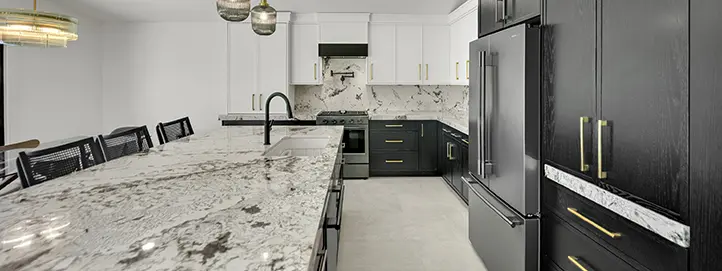
- Choosing appliances after the cabinet layout is already finalized.
- Planning an island that is too large for comfortable walkways.
- Forgetting outlet, lighting, or switching needs until walls are already closed.
- Choosing a slab backsplash without confirming seams, outlet locations, hood details, and fabrication limitations.
- Assuming an old duct path can support a new high-output hood.
- Opening walls without understanding permit triggers or inspection requirements.
- Ordering custom materials before the final layout, dimensions, and site conditions are verified.
- Over-building the kitchen in a way that does not match the home, neighborhood, or long-term plans.
The best way to protect a luxury remodel is to slow down before construction and make the key decisions in the right order. A clean preconstruction process is not a delay; it is what protects the finished result.
How to Plan a Luxury Kitchen Remodel in Las Vegas
Start with the existing conditions. Las Vegas homes vary by age, slab condition, framing, electrical capacity, previous remodel quality, HOA requirements, and jurisdiction. A luxury remodel should begin with a walkthrough, measurements, utility review, cabinet and appliance planning, finish-level discussion, and permit review when required.
- Clarify the goal: entertaining kitchen, chef-focused kitchen, open-concept kitchen, storage-focused kitchen, or full custom showpiece.
- Confirm the layout: decide whether the sink, range, refrigerator, island, walls, and openings stay or move.
- Select appliances early: model numbers and specifications should be reviewed before cabinet ordering.
- Plan cabinetry as a system: door style, finish, interiors, panels, fillers, crown, toe kicks, storage accessories, and appliance integration.
- Coordinate surfaces and lighting: countertops, backsplash, flooring, hardware, fixtures, lighting temperature, and switching zones.
- Review permit triggers: electrical, plumbing, gas, ventilation, structural, wall, and opening changes should be evaluated before demolition.
- Build the written scope: identify what is included, excluded, owner-provided, pending selection, or dependent on field conditions.
If you are still comparing ideas, start with the main Big Horn Remodeling kitchen remodel service page. For deeper planning, review the kitchen remodel cost guide, full kitchen remodel scope guide, kitchen remodel timeline guide, and Las Vegas kitchen permit guide.
When a Luxury Kitchen Remodel Is the Wrong Scope
A luxury scope may be unnecessary if the homeowner only wants a cosmetic refresh, short-term resale cleanup, or basic cabinet and countertop replacement. In that situation, the right project may be a simpler same-layout update, a semi-custom cabinet package, or a targeted finish refresh instead of a full premium planning process.
This page is not for cosmetic refreshes
- Keeping existing cabinets and only changing paint, hardware, or fixtures.
- Replacing counters without changing storage, lighting, appliance integration, or ventilation.
- Preparing a house for near-term resale with basic finish updates.
- Choosing the lowest reasonable scope because long-term use is not the priority.
- Avoiding the planning time needed for cabinet elevations, appliance specs, slab coordination, and lighting zones.
A luxury kitchen remodel makes sense when the homeowner wants the kitchen planned as a complete system and expects the finished details to hold up under daily use. If the goal is only to make the room look newer, a lighter remodel scope may be the better fit.
Final CTA
Planning a luxury kitchen remodel in Las Vegas? Big Horn Remodeling can help you turn design ideas into a buildable scope with clear planning, trade coordination, permit review, and quality execution from the first walkthrough through final punch list. Call or text (702) 799-9902 to ask for Nathan and schedule a free consultation.