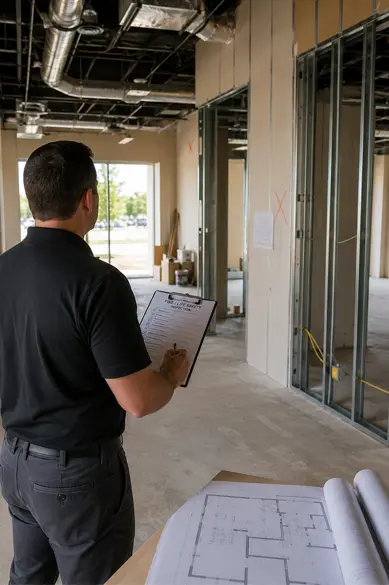
Verify a Nevada contractor before you sign a contract or pay a deposit. Search by company name, license number, principal, or qualifying individual to review available license details, status, classifications, monetary limit, disciplinary information, and permit activity in supported Las Vegas-area jurisdictions.
Verify aNevada Contractor
Search by company name, license number, or the people behind the license. Open any result for its monetary limit, bond, disciplinary record, and local permit history.
start here
Contractor Verification ToolNevada license & permit history
Live · NSCB
New here? Try it on us — verify Big Horn Remodeling (license #0091383)
About this verification tool
Big Horn Remodeling’s Nevada contractor license search helps consumers review license information retrieved from Nevada State Contractors Board records, understand license status, classifications, qualifiers, monetary limits and disciplinary information, and compare those records with available permit activity from supported Las Vegas-area jurisdictions. Big Horn’s automated explanations are educational summaries, not official Board findings, and important information should be confirmed with the original government source.
This tool is for researching and verifying contractors. It does not determine whether your project needs a permit or replace professional permit coordination. For help with unpermitted work, code violations, or retroactive approvals, visit our Las Vegas permit services page.
Verify our license
We hold ourselves to the same standard.
Big Horn Remodeling is a licensed Nevada B-2 General Building contractor in good standing. Run us through this same tool, or check us directly against the state’s official record — we have nothing to hide.
Big Horn Remodeling is not affiliated with, sponsored by, or endorsed by the Nevada State Contractors Board.
Reviewed by Nathan Nehoraoff, Nevada B-2 General Building Contractor, License #0091383. Last reviewed July 2026.
Due diligenceBefore you hireCheck a Las VegasContractor LicenseBefore You Hire
A professional website, polished estimate, or referral does not prove that a contractor is properly licensed for your project. Nevada licenses are issued for defined classifications and may include a maximum monetary limit. A license can also be inactive, suspended, revoked, restricted, expired, or associated with disciplinary action. Those details can materially change the risk of hiring the company.
This search brings Nevada State Contractors Board license data and available local permit-history signals into one report. You can see whether the business name matches the license, whether the license appears current, which work classifications are listed, who qualifies the license, and whether available permit records show a history of permitted construction in the City of Las Vegas or Clark County.
A clean record lines up
The name matches the license
The status is current
The classification fits the work
The monetary limit covers it
What This Contractor Search Shows You
Business and license identity
Confirms that the company giving you the proposal matches the entity on the license record.
License status
Shows whether the license appears active and in good standing or whether follow-up is needed.
License classification
Indicates the category of construction work the contractor is authorized and qualified to perform.
Monetary limit
Shows the maximum contract amount the contractor may undertake under the license, subject to Nevada rules.
Qualifying party
Identifies the experienced person connected to the license classification and responsible for qualification.
Disciplinary records
Surfaces public Board actions and helps you understand the type, date, outcome, and relevance.
Available permit history
Shows permit records associated with the contractor in supported local jurisdictions, where matching data is available.
Questions to ask
Turns the record into practical due-diligence steps before you hire.
How to Read a Nevada Contractor License Record
Do not judge a contractor from one field alone. Read the license as a complete record and compare it with the proposal in front of you. The legal business name should match the contracting party. The classification should fit the work. The monetary limit should accommodate the project. The status should be current. The person presenting the company should be able to explain who owns the business, who qualifies the license, and who will supervise the work.
Read the recordLicense statusesWhat ContractorLicense Statuses Mean
Nevada contractor license statuses and how a consumer should interpret each
Possible status
Consumer interpretation
Possible statusActive / current
Consumer interpretationThe license appears available for contracting, subject to its classification, monetary limit, and any listed conditions. Confirm the effective date and current Board record.
Possible statusInactive
Consumer interpretationThe license is generally not positioned for active contracting. Ask the Board and contractor for the exact reason and whether contracting is currently permitted.
Possible statusExpired
Consumer interpretationThe renewal period has passed. Do not assume the contractor can legally enter or perform the proposed contract until the record is corrected and verified.
Possible statusSuspended
Consumer interpretationThe Board has temporarily removed or limited the ability to contract. This is a major issue requiring direct verification before proceeding.
Possible statusRevoked
Consumer interpretationThe license has been withdrawn through Board action. Do not hire under that license.
Possible statusCancelled / closed
Consumer interpretationThe license record is no longer operating in its prior form. Determine whether the contractor is using a different valid license and legal entity.
Possible statusRestricted / conditional
Consumer interpretationThe contractor may be subject to limitations beyond the standard classification or monetary limit. Read the conditions and ask for written clarification.
Possible statusStatus unclear
Consumer interpretationPublic data can be delayed or incomplete. Pause the hiring process and verify directly with the Board.
What Is a Qualifying Party on a Nevada Contractor License?
The qualifying party is the person whose experience, knowledge, and skills support the license classification. Nevada’s Contractors Board describes the qualifier (also called a qualified individual) as a person regularly employed by the licensee and actively engaged in the work classification on the license. Depending on the business structure, the qualifier may be an owner, member, manager, officer, partner, or employee.
A qualifier is not automatically the salesperson, estimator, project manager, or person who will be physically present every day. Consumers should ask how the qualifier participates in operations, how long that person has been associated with the company, and who has direct responsibility for supervision and quality control on the proposed project.
Useful question: “Who is the qualifying party for this license, and what role will that person have in supervising or overseeing my project?”
What Does a Contractor Monetary Limit Mean?
A Nevada contractor monetary limit is a cap Nevada may place on a contractor’s license. In practical terms, the limit is intended to cap the size of contract the licensee may undertake under the applicable rules. Compare the limit with the entire proposed contract value, including labor and materials, rather than looking only at the first deposit or a single phase.
A high monetary limit is not a quality rating, and a lower limit does not automatically mean the contractor is unqualified. It is a financial and licensing constraint. The critical question is whether the contractor’s limit legally accommodates your project and whether the proposal has been divided in a way that attempts to evade the limit.
Who holds our license?
Big Horn Remodeling’s Nevada B-2 license #0091383 is qualified by a full-time owner who runs the licensed work — not a rented qualifier. Ask every contractor to show you the same.
Always compare the limit against your full contract value — labor and materials — never just the deposit.
On Big Horn’s Board record
Zero
Disciplinary actions, complaints, or suspensions on file — a clean Nevada record you can verify the same way you’d verify anyone’s.
Read it in contextIn contextHow to EvaluateContractor Violationsand Disciplinary Actions
A disciplinary record deserves attention, but the presence of a record is not enough to reach a fair conclusion. Review what occurred, when it occurred, whether the allegation became a final finding, what penalty was imposed, whether corrective action was completed, and whether similar conduct appears repeatedly.
read thewhole record
Disciplinary signals and how to interpret them
Signal
How to interpret it
SignalComplaint only
How to interpret itA complaint is an allegation, not automatically a proven violation. Look for disposition and final action.
SignalLetter of reprimand
How to interpret itA formal Board response that should be read in context, including the underlying conduct and date.
SignalFine or assessed costs
How to interpret itDetermine the violation, amount, whether it was paid, and whether additional corrective orders were issued.
SignalOrder of correction
How to interpret itThe contractor may have been required to remedy work or conduct. Confirm completion and any related inspection outcome.
SignalProbation or added limitations
How to interpret itIndicates continued practice may be subject to conditions. Ask for the current status and written terms.
SignalSuspension
How to interpret itA serious restriction. Verify whether the suspension remains in effect and do not proceed without official confirmation.
SignalRevocation
How to interpret itThe most serious license outcome. The contractor cannot rely on the revoked license to contract.
SignalRepeated similar actions
How to interpret itA pattern can be more meaningful than a single old event, especially when it relates to workmanship, money, abandonment, or unlicensed activity.
Fair-use language for the automated report: “This record may warrant additional questions” is safer and more accurate than “this contractor is bad” or “this contractor is fraudulent.”
Permits are proofPermit historyHow Permit History SupportsContractor Verification
A contractor’s available permit history can provide evidence of real, jurisdiction-tracked construction activity. Permit records may show the type of work, project address or general location, application and issuance dates, contractor of record, inspection activity, and whether a permit reached final status. For projects that legally require permits, a consistent history can support the contractor’s claim that it works through official review and inspection channels.
Permit history is particularly useful when a company claims extensive experience with additions, structural alterations, electrical or plumbing changes, commercial buildouts, occupancy changes, or other permit-intensive work. Search results let the consumer compare those claims with available public records instead of relying only on photos and testimonials. Not sure whether your own project needs a permit? See when a kitchen remodel needs permits or our retroactive permit services in Las Vegas.
150+
permits pulled in the Las Vegas area
1,500+
jobs completed for homes and businesses
24-hr
cache on live-retrieved license data
What a Low Permit Count Does — and Does Not — Mean
No permit history does not prove illegal work. A low or empty permit count is a reason to ask questions, not proof of wrongdoing. Some projects do not require permits. Some contractors perform work outside the supported jurisdictions, work as subcontractors under another permit holder, operate under a prior business name or license, or have records that do not match cleanly because of spelling and database differences. Older records may also be unavailable online.
The concern becomes stronger when the contractor markets a large volume of permit-required work in the same jurisdictions but cannot identify corresponding permits, inspections, or final approvals. In that situation, ask for a representative permit list, permit numbers, project addresses, and an explanation of who was listed as contractor of record.
City of Las VegasClark County
Supported jurisdictions: City of Las Vegas and Clark County.
Permit-history patterns and the appropriate next step for each
Permit-history pattern
Appropriate next step
Permit-history patternMany relevant permits with final activity
Appropriate next stepReview whether project types and dates support the experience being advertised.
Permit-history patternMany permits but few finals
Appropriate next stepAsk why permits remain open, expired, withdrawn, or incomplete; recognize that database status may require verification.
Permit-history patternFew permits despite claims of extensive local structural or MEP work
Appropriate next stepAsk for permit numbers and an explanation of jurisdiction, role, prior license, or contractor-of-record differences.
Permit-history patternNo permits found
Appropriate next stepDo not call it proof of unlicensed work. Verify name variants, license number, jurisdictions, subcontractor role, and whether the described work required permits.
Permit-history patternPermits under a different company
Appropriate next stepConfirm the legal relationship and do not credit another entity's history without evidence.
Permit-history patternRecent license with limited history
Appropriate next stepEvaluate the qualifier's prior experience and the company's actual operating history separately.
Before you signRed flagsRed Flags to InvestigateBefore Signing a Contract
The name on the contract does not match the legal entity on the license.
The contractor asks you to pull an owner-builder permit while the contractor controls and performs the work.
The license is expired, inactive, suspended, revoked, or unclear.
The classification does not appear to cover the proposed work.
The contract amount appears to exceed the monetary limit.
The salesperson refuses to identify the qualifying party or responsible license holder.
The company claims extensive local permit-required work but will not provide permit numbers or final inspection records.
The proposal says permits are unnecessary without explaining the applicable scope and jurisdiction.
The contractor offers to split one project into separate contracts to stay below a license limit.
There are repeated, recent disciplinary actions involving similar conduct, unresolved correction orders, or license restrictions.
Questions to Ask the Contractor Based on Your Search Results
What is the exact legal entity that will sign my contract, and does it match this license?
Which license classification covers every part of my scope?
Is the total contract within the license monetary limit?
Who is the qualifying party, and how is that person involved in company operations?
Who will obtain each required permit, and under whose license will it be issued?
Can you provide three recent permit numbers for projects similar to mine?
Were those permits finalized, and can I review inspection or closeout documentation?
Please explain any disciplinary action, restriction, suspension, or correction order shown in the record.
Will licensed subcontractors be used for electrical, plumbing, mechanical, fire, or specialty work when required?
What happens in writing if an inspector requires corrections or additional work?
We don't replace the BoardThe differenceHow This Tool Differs From theNevada State Contractors Board Search
The Nevada State Contractors Board is the authoritative source for Nevada license and disciplinary information. This tool does not replace the Board. It makes the public information easier for a homeowner, property owner, tenant, real estate professional, or business owner to understand and act on.
Official Board Search
the source of record
Authoritative license record
Search by license, company, principal or qualifier
License fields and public disciplinary data
Does not function as a consolidated local permit-history report
User must interpret technical terms
Big Horn Verification Tool
plain-English & permit history
Plain-English explanation tied to the available official record
Guided search with consumer-oriented prompts
Definitions, context, warning signs, and follow-up questions
Adds available contractor permit records from supported Las Vegas-area jurisdictions
Automated explanation with visible source and limitation disclosures
License data source • Nevada State Contractors Board records
License data is retrieved from Nevada State Contractors Board records. Permit results are matched from supported local-jurisdiction databases. Automated explanations are educational and are not official Board findings, legal advice, or endorsements.
Contact UsToday!
online
Ask forNathan
Business Hours
Mon-Fri: 7:00 AM - 7:00 PM
Sat: 8:00 AM - 7:00 PM
Sun: 8:00 AM - 6:00 PM
You can still text outside business hours and receive a prompt reply
Contact Channels
Choose your preferred channel for project questions, photos, scope notes, scheduling, and faster day-to-day communication updates.
Nathan leads Big Horn's field execution with accountable coordination for residential remodeling and commercial tenant improvement projects, including permit-ready scope control, from preconstruction through final closeout.
License number 0091383
$800,000 Bid Limit
238+ Google reviews
Verify Big HornRemodeling, too
Use this contractor search for any company you are considering — including us. Search Big Horn Remodeling or Nevada license #0091383, review the available record, and make your decision from verifiable information.
Need help resolving unpermitted work or a code violation? Big Horn Remodeling coordinates retroactive permits, drawings, corrections, inspections, and final approval throughout the Las Vegas Valley. View our Las Vegas permit services.
The fine printData Sources, Coverage and Important Limitations
License information displayed by the tool is retrieved from Nevada State Contractors Board records, including available identity, status, classification, monetary-limit, qualifier, and disciplinary fields. Permit information is retrieved from supported local jurisdiction records and matched using available contractor names, license numbers, entities, and related identifiers. Records may be delayed, incomplete, duplicated, archived, or unavailable online. Matching can be affected by name changes, DBAs, prior licenses, subcontractor relationships, spelling differences, and jurisdiction boundaries.
Big Horn Remodeling’s automated explanations summarize fields returned by the Nevada State Contractors Board and supported permit sources and provide educational questions for consumer due diligence. The explanations are not Nevada State Contractors Board determinations, legal advice, a comprehensive background check, a guarantee of contractor performance, or an endorsement by Big Horn Remodeling, the Board, or any government agency. Big Horn Remodeling is not affiliated with, sponsored by, or endorsed by the Nevada State Contractors Board.
License information is retrieved from Nevada State Contractors Board records and presented in a simplified, consumer-friendly format. Big Horn Remodeling may use automated analysis to explain terminology, summarize the returned fields, and suggest questions a consumer may wish to ask. These explanations are educational and are not official findings or determinations of the Nevada State Contractors Board. The original Board record remains the authoritative source for contractor-license information. Permit information is obtained separately from supported local building jurisdictions and may not include every permit, project, address, entity, or jurisdiction associated with a contractor. Records and matches may be delayed, incomplete, duplicated, archived, or affected by name variations. Big Horn Remodeling is not affiliated with, sponsored by, or endorsed by the Nevada State Contractors Board.
Are you the contractor shown in a report?
Public databases can contain delays or matching errors. Submit a correction request to nathan@bighornremodeling.com with your license number, the disputed field, supporting documentation, and a link to the official record. Big Horn Remodeling will review qualifying requests and update its interpretation or match where appropriate.
Government records and laws can change. Reports display live-retrieved data with cached results no older than 24 hours. Explanatory content last reviewed July 2026.
FrequentlyAsked Questions
How do I check if a contractor is licensed in Las Vegas?
Search the contractor's company name, Nevada license number, principal, or qualifying individual. Confirm that the legal name on the license matches your contract, the status is current, the classification covers your work, and the monetary limit is sufficient. Then verify the same information through the Nevada State Contractors Board, which is the official source of record.
What is the best contractor license search for Nevada?
The Nevada State Contractors Board provides the official Nevada license search and is the source of the license data displayed by Big Horn Remodeling. Big Horn's tool adds plain-English explanations and available Las Vegas-area permit history so consumers can understand the record and know what questions to ask.
Can I search a Nevada contractor by company name?
Yes. Nevada's public license search supports company-name searches, and it also allows searches by license number or by a principal or qualified individual. Using the license number usually produces the most precise match.
What does an active Nevada contractor license mean?
An active or current status generally indicates that the license is available for contracting within its classification, monetary limit, and any listed restrictions. It does not guarantee workmanship, pricing, scheduling, or future performance.
What does an expired contractor license mean?
An expired status means the license renewal is not current in the public record. Do not assume the contractor can legally contract or perform the work until the Nevada State Contractors Board confirms the license has been renewed and is available.
What is a qualifying party on a contractor license?
A qualifying party is the experienced person connected to the licensed classification. The qualifier must have the knowledge and skill to supervise or perform the work and must be regularly employed and actively engaged on behalf of the licensee.
Does the qualifying party have to be the company owner?
No. Depending on the business structure, a Nevada qualifier may be an owner, partner, member, manager, officer, or employee. Ask how the qualifier participates in the business and who will supervise your project.
What is a contractor monetary limit in Nevada?
The monetary limit is the maximum contract amount the licensee may undertake under Nevada licensing rules. Compare it with the total project value, including labor and materials. A monetary limit is not a customer rating or quality score.
Can a contractor split a project into smaller contracts to avoid the monetary limit?
A consumer should be cautious if one project is divided primarily to avoid a license limit. Ask the Nevada State Contractors Board how the limit applies to the complete project and do not rely on a contractor's informal explanation.
What is the difference between a contractor complaint and a violation?
A complaint is an allegation submitted for review. A violation generally refers to a finding that a law, regulation, or Board requirement was breached. Read the final disposition rather than treating every complaint as proven misconduct.
What disciplinary actions can the Nevada State Contractors Board impose?
Depending on the case, Board action may include a reprimand, fine, correction order, probation, license limitations, suspension, or revocation. The significance depends on the final findings, dates, pattern, corrective action, and current license status.
Does a contractor violation mean I should never hire the company?
Not automatically. Review the type and age of the violation, whether it became a final finding, whether the contractor corrected the issue, and whether similar conduct appears repeatedly. Serious, recent, repeated, or unresolved actions deserve greater caution.
Can I see permits pulled by a contractor in Las Vegas?
Available public permit databases may allow contractor-related records to be found by jurisdiction, contractor identity, project, address, or permit number. This tool consolidates matching records from supported City of Las Vegas and Clark County sources when the data is available.
Does a high permit count prove a contractor is good?
No. Permit volume can support claims of experience with regulated work, but it does not prove workmanship, customer service, financial stability, or whether every project passed final inspection. Review permit types and statuses, not only the count.
Does no permit history mean a contractor works illegally?
No. A missing permit match is not proof of illegal work. The company may work in other jurisdictions, perform non-permitted scopes, operate under a prior entity, work as a subcontractor, or have records that do not match cleanly. Ask for permit numbers for comparable projects.
Why should I check whether a permit was finalized?
A permit may be issued but remain open, expire, be withdrawn, or lack final inspection. Final status can provide stronger evidence that required inspections and closeout steps were completed, although database status should still be confirmed with the jurisdiction.
Can a homeowner pull the permit for a contractor?
Owner-builder rules are fact-specific. Be cautious when a contractor asks you to act as owner-builder while the contractor controls the work. Doing so can shift responsibility and may reduce consumer protections. Confirm the correct permit applicant with the jurisdiction and the Contractors Board.
Are permit records the same in the City of Las Vegas and Clark County?
No. They are separate jurisdictions with separate systems, record structures, and coverage. A Las Vegas mailing address may also be outside City of Las Vegas limits, so the correct jurisdiction must be identified before concluding that no permit exists.
How current is the information in this contractor search?
Searches run against live government sources, with successful results cached for up to 24 hours. Government databases can change, and some records may be delayed, incomplete, archived, or unavailable electronically. Always confirm material findings at the official source before hiring.
Is this tool a recommendation or legal opinion?
No. The tool organizes public information and provides educational explanations. It is not a legal opinion, a guarantee, a background check, or an endorsement of any contractor. Hiring decisions should consider contracts, insurance, references, project fit, and direct verification with government agencies.
Still have questions about your project? Click the button to get a free consultation and our team will help you with scope, timeline, and next steps.